
Meta Description: Wondering what is whey protein concentrate? Discover its benefits, how it differs from isolate, how to use it, and why it’s the most popular protein supplement worldwide.
What is whey protein concentrate and why does everyone from gym beginners to elite athletes seem to have a tub of it on their kitchen counter?
If you have ever walked into a supplement store or scrolled through a fitness site, you have probably come across whey protein concentrate. It is one of the most researched, widely used, and cost-effective protein supplements available today. But not everyone actually knows what it is, how it is made, or whether it is right for them.
In this guide, we are going to break it all down in plain language. No fluff, no jargon overload. Just real, useful information.
What Is Whey Protein Concentrate, Exactly?
Whey protein concentrate (WPC) is a natural byproduct of the cheese-making process. When milk is curdled to make cheese, it separates into two parts: solid curds and a liquid called whey. This liquid whey is then filtered, processed, and dried into a powder and that powder is what we call whey protein concentrate.
The ‘concentrate’ part refers to the fact that it is not heavily processed. It retains a natural ratio of protein, carbohydrates (mainly lactose), and fats. This is what makes it different from more refined versions like whey protein isolate or hydrolysate.
Typical whey protein concentrate contains:
- 70% to 80% protein by weight
- Small amounts of fat (1 to 5 grams per serving)
- Small amounts of lactose (carbohydrates)
- Naturally occurring bioactive compounds like immunoglobulins and lactoferrin
These bioactive compounds are often stripped away in more processed forms of whey, which is one reason many health-conscious people prefer whey protein concentrate over isolate.
How Is Whey Protein Concentrate Made?
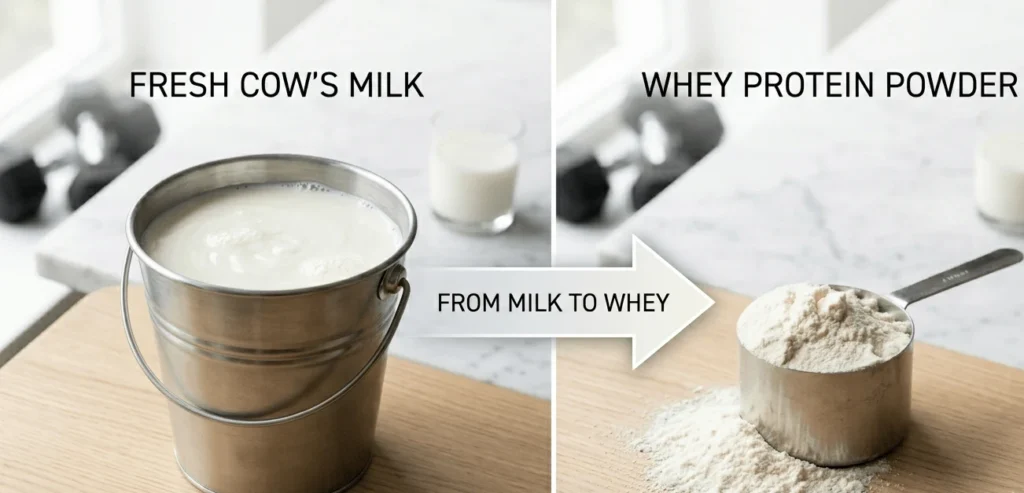
Understanding how whey protein concentrate is produced helps you appreciate the quality of what you are consuming.
Step-by-Step Production Process
The process starts on a dairy farm specifically with cow’s milk. Here is a simplified breakdown:
- Milk is collected and pasteurized to ensure safety.
- Enzymes or acids are added to the milk, causing it to curdle and separate into solid curds and liquid whey.
- The liquid whey is separated and filtered to remove most of the fat and lactose.
- The filtered whey is then concentrated using techniques like ultrafiltration.
- Finally, the concentrated liquid is spray-dried into a powder, giving us whey protein concentrate.
The degree of filtration determines the final protein percentage. Less filtration means more lactose and fat remain giving you a standard WPC-70 or WPC-80 product.
Whey Protein Concentrate vs Whey Protein Isolate vs Hydrolysate
A very common question people ask is: what is whey protein concentrate compared to isolate or hydrolysate? Let’s clear this up.
Whey Protein Concentrate (WPC)
- Protein content: 70-80%
- Contains some fat and lactose
- More affordable
- Retains bioactive compounds
- Best for: general fitness, bulking, everyday use
Whey Protein Isolate (WPI)
- Protein content: 90%+
- Very low fat and lactose
- More expensive due to extra processing
- Fewer bioactive compounds
- Best for: lactose-sensitive individuals, cutting phases, lean muscle goals
Whey Protein Hydrolysate (WPH)
- Pre-digested for faster absorption
- Highest cost
- Often bitter in taste
- Best for: post-workout rapid recovery, clinical nutrition
For most people, whey protein concentrate offers the best balance of nutrition, cost, and taste. Unless you have specific lactose intolerance or dietary requirements, WPC is the smart starting point.What Is Whey Protein? The Complete Guide You Actually Need to Read
Key Benefits of Whey Protein Concentrate
So what does whey protein concentrate actually do for your body? Here are the most well-supported, science-backed benefits.https://www.healthline.com/nutrition/10-health-benefits-of-whey-protein
1. Supports Muscle Growth and Recovery
Whey protein concentrate is rich in all nine essential amino acids, including leucine the amino acid most responsible for triggering muscle protein synthesis (MPS). This makes it highly effective for building and repairing muscle after resistance training.
Research published in the Journal of the International Society of Sports Nutrition consistently shows that consuming whey protein post-workout accelerates recovery and promotes lean muscle gains https://pubmed.ncbi.nlm.nih.gov/compared to no protein supplementation.
2. Helps With Weight Management
Protein is the most satiating macronutrient. Consuming whey protein concentrate as part of a calorie-controlled diet can help reduce hunger, lower overall calorie intake, and preserve lean muscle while losing fat.
A study in the American Journal of Clinical Nutrition found that high-protein diets lead to greater fat loss while maintaining muscle mass, compared to standard-protein diets.
3. High Biological Value (BV)
Whey protein concentrate has one of the highest biological values of any protein source. BV measures how efficiently the body can use the protein you consume. Whey scores around 104 on the BV scale higher than eggs (100), beef (80), or soy (74).
4. Provides Immune Support
Unlike more processed forms of whey, whey protein concentrate retains important bioactive peptides like immunoglobulins, lactoferrin, and beta-lactoglobulin. These compounds support immune function, have antioxidant properties, and may help reduce inflammation.
5. Affordable and Accessible
Compared to isolates and hydrolysates, whey protein concentrate is significantly more affordable. This makes it accessible for long-term, consistent use which is key for any fitness goal.
Who Should Use Whey Protein Concentrate?
Whey protein concentrate is not just for bodybuilders. Here is who can genuinely benefit from including it in their diet:
- Gym-goers and strength trainers: To support muscle recovery and growth after workouts.
- Weight-loss individuals: As a high-protein, satiating food to reduce overall calorie intake.
- Older adults: Protein needs increase with age; whey protein concentrate helps prevent sarcopenia (muscle loss).
- Athletes and sports players: For faster recovery between training sessions.
- Busy professionals: When whole food protein sources are not available, a quick shake fills the gap.
The only group that may want to consider whey protein isolate instead is people with moderate to severe lactose intolerance, since WPC contains more lactose than isolate.
How to Use Whey Protein Concentrate
Recommended Dosage
Most adults benefit from 20 to 40 grams of protein per serving. A standard serving of whey protein concentrate (one scoop) typically provides around 22 to 25 grams of protein.
Your total daily protein intake should be based on your body weight and goals. A general guideline for active individuals is 1.6 to 2.2 grams of protein per kilogram of body weight per day.
Best Times to Take It
- Post-workout: Within 30 to 60 minutes after training for optimal muscle protein synthesis.
- Morning: To break the overnight fast and jumpstart your metabolism.
- Between meals: As a healthy, filling snack to hit your protein targets.
- Before bed: Combined with casein or taken alone to support overnight recovery.
How to Prepare It
Whey protein concentrate dissolves easily in water or milk. You can also blend it into smoothies, stir it into oatmeal, mix it into pancake batter, or add it to yogurt. Its creamy flavour (especially chocolate or vanilla variants) makes it versatile in the kitchen.
Potential Side Effects of Whey Protein Concentrate
Whey protein concentrate is safe for most healthy adults. However, here are a few things to be aware of:
- Lactose sensitivity: WPC contains lactose, which can cause bloating, gas, or digestive discomfort in those who are sensitive. Switching to isolate or using a lactase enzyme supplement can help.
- Kidney concerns: For people with pre-existing kidney disease, high protein intake may need to be monitored. Healthy individuals do not face kidney risks from normal protein consumption.
- Calorie surplus: Adding a protein shake without adjusting total calorie intake may contribute to weight gain. Always account for it within your daily nutritional plan.
- Allergies: Whey is a dairy-derived product. Those with milk allergies should avoid it entirely and opt for plant-based alternatives like pea protein.
As always, consult a healthcare professional or registered dietitian before starting any new supplement, especially if you have an existing medical condition.
What to Look for When Buying Whey Protein Concentrate
Not all whey protein concentrate products are created equal. Here are key factors to check before purchasing:
- Protein percentage per serving: Look for at least 70-80% protein content. Read the label carefully.
- Amino acid profile: Ensure it is a complete protein with all essential amino acids.
- Third-party testing: Look for certifications from Informed Sport, NSF Certified for Sport, or Labdoor ratings to verify label accuracy and purity.
- Minimal fillers and additives: Avoid products with excessive artificial sweeteners, colours, or unnecessary fillers.
- Reputable brand: Choose brands with transparent sourcing and positive independent reviews.
- Flavour and mixability: A good WPC should dissolve smoothly without clumping.
Popular and well-regarded brands include Optimum Nutrition Gold Standard Whey (a blend of WPC and WPI), Dymatize Elite Whey, and MyProtein Impact Whey Protein all available in India and internationally.Best Protein Powder in India: The Ultimate Guide by a Certified Dietitian (2025)
Frequently Asked Questions (FAQ)
Here are the most commonly asked questions about what is whey protein concentrate, answered clearly.
Q1. What is whey protein concentrate made from?
Whey protein concentrate is made from the liquid whey that separates from milk during the cheese-making process. It is filtered and spray-dried into a powder containing 70-80% protein along with small amounts of fat and lactose.
Q2. Is whey protein concentrate good for beginners?
Yes, whey protein concentrate is actually the ideal starting supplement for beginners. It is affordable, nutritious, and effective for building a solid protein intake foundation. It is easy to use and widely available.
Q3. What is whey protein concentrate used for in fitness?
Whey protein concentrate is primarily used to increase daily protein intake, support muscle repair and growth after workouts, aid in weight management, and improve overall recovery time between training sessions.
Q4. Is whey protein concentrate better than whey protein isolate?
Neither is universally better it depends on your goals. Whey protein concentrate is more affordable and retains beneficial bioactive compounds. Whey protein isolate is better for those who are lactose intolerant or want maximum protein with minimal fat and carbs.
Q5. Can I take whey protein concentrate every day?
Yes, you can take whey protein concentrate daily as part of a balanced diet. It is a food-derived supplement and safe for regular consumption. Just ensure your total daily protein and calorie intake aligns with your health goals.
Q6. Does whey protein concentrate cause weight gain?
Whey protein concentrate itself does not directly cause weight gain. Weight gain happens when you consume more calories than you burn. Used within your calorie targets, it can actually support fat loss by preserving muscle mass and improving satiety.
Q7. What is the difference between whey protein concentrate 70 and 80?
WPC-70 contains approximately 70% protein per 100 grams, while WPC-80 contains approximately 80% protein. WPC-80 is more filtered, slightly lower in fat and lactose, and is the more commonly available form in retail supplements
Q8. Is whey protein concentrate vegan?
No. Whey protein concentrate is derived from cow’s milk, making it a dairy product unsuitable for vegans. Vegan alternatives include pea protein, soy protein, rice protein, and hemp protein
Q9. Can lactose-intolerant people use whey protein concentrate?
People with mild lactose intolerance may tolerate WPC in small amounts, especially when mixed with food. However, those with moderate to severe intolerance should consider whey protein isolate (which has minimal lactose) or a lactose-free plant-based protein.
Q10. How much whey protein concentrate should I take per day?
Most adults benefit from 1 to 2 servings (20 to 50 grams of protein from WPC) per day, depending on their total dietary protein intake. A sports nutritionist or dietitian can give you a personalised recommendation based on your weight, activity level, and goals.
References
The following scientific and academic sources were referenced in creating this article:
1. Phillips SM, Van Loon LJC. Dietary protein for athletes: From requirements to optimum adaptation. Journal of Sports Sciences. 2011;29(S1):S29-S38.
2. Hulmi JJ, Lockwood CM, Stout JR. Effect of protein/essential amino acids and resistance training on skeletal muscle hypertrophy: A case for whey protein. Nutrition & Metabolism. 2010;7:51.
3. Tang JE, Moore DR, Kujbida GW, Tarnopolsky MA, Phillips SM. Ingestion of whey hydrolysate, casein, or soy protein isolate: effects on mixed muscle protein synthesis at rest and following resistance exercise in young men. Journal of Applied Physiology. 2009;107(3):987-992.
4. Leidy HJ, Clifton PM, Astrup A, et al. The role of protein in weight loss and maintenance. American Journal of Clinical Nutrition. 2015;101(6):1320S-1329S.
5. Hoffman JR, Falvo MJ. Protein – Which is best? Journal of Sports Science & Medicine. 2004;3(3):118-130.
6. Bounous G. Whey protein concentrate (WPC) and glutathione modulation in cancer treatment. Anticancer Research. 2000;20(6C):4785-4792.
7. USDA FoodData Central. Whey protein concentrate, dry. https://fdc.nal.usda.gov/ (Accessed 2024).
8. International Society of Sports Nutrition Position Stand: Protein and Exercise. Journal of the International Society of Sports Nutrition. 2017;14:20.
Disclaimer
The information provided in this article is for educational and informational purposes only. It is not intended as medical advice, diagnosis, or treatment. Always consult a qualified healthcare professional, registered dietitian, or sports nutritionist before making any changes to your diet or supplement routine.
Individual results from using whey protein concentrate may vary based on factors including age, health status, fitness level, diet, and exercise habits. The author and publisher of this content are not responsible for any adverse effects or consequences resulting from the use of information discussed in this article.
This blog post does not endorse any specific brand or product. Any brand names mentioned are for informational reference only. Always read product labels and verify certifications before purchasing any supplement.
References to scientific studies are provided for informational context. This article does not replace guidance from a licensed medical or nutritional professional.