
Sperm morphology normal range is one of the most misunderstood values in a standard semen analysis report and yet it plays a major role in male fertility.
If you recently got your semen analysis results back and you’re staring at that morphology percentage wondering whether you should be worried, you’re not alone. A lot of men feel confused and honestly, the numbers can feel pretty alarming at first glance.
In this article, we’re going to break it all down in plain language. No scary jargon, no confusing charts just clear, evidence-based information that helps you actually understand what your results mean and what you can do about them.
What Is Sperm Morphology?
Sperm morphology simply refers to the size and shape of sperm cells. A sperm with normal morphology has a well-defined oval head, a strong midsection, and a single long tail. These structural features are not just cosmetic they directly affect how well a sperm can swim toward and fertilize an egg.
When sperm have abnormal shapes like a crooked tail, a misshapen head, or two heads they are less likely to travel efficiently and penetrate an egg successfully.
This is measured during a semen analysis using a process called strict morphology grading, most commonly following the Kruger criteria or the WHO criteria.
Why Does Sperm Shape Matter for Fertility?
You might wonder: if there are millions of sperm, does the shape of each one really matter?
The answer is yes to a point. Even in fertile men, most sperm are technically abnormal. What matters is the percentage of sperm that meet the criteria for normal form, because those are the ones most likely to successfully fertilize an egg.
Sperm with poor morphology may have trouble penetrating the egg’s outer layer. They may also carry damaged DNA, which affects not just fertilization but also embryo quality.
Sperm Morphology Normal Range: What the Numbers Mean
Understanding the sperm morphology normal range starts with knowing which reference standard your lab is using. The two most widely referenced guidelines are the WHO (World Health Organization) criteria and the Kruger strict morphology criteria.
WHO 2021 Reference Values for Sperm Morphology
According to the latest WHO reference values (5th and 6th editions), the lower reference limit for normal sperm morphology is:https://www.who.int/publications/i/item/9789240030787
Normal Morphology: ≥ 4% (WHO lower reference limit)
Yes that means even 4% is considered within normal range. This surprises a lot of people. It seems incredibly low, but it’s backed by decades of fertility research comparing men who achieved natural conception versus those who did not.
Kruger Strict Morphology Criteria
The Kruger strict criteria uses a more detailed and demanding grading system. Under Kruger:
- Greater than or equal to 14% normal forms = good prognosis for IVF
- 4% to 14% = fair prognosis
- Less than 4% = poor prognosis (teratozoospermia)
The Kruger criteria are often used in IVF and ICSI clinics because they offer a more detailed picture of fertilization potential.
What Is Teratozoospermia?
Teratozoospermia is the clinical term for having an abnormally high percentage of malformed sperm. It is diagnosed when normal sperm morphology falls below the WHO’s lower reference limit of 4%.
Teratozoospermia can be mild (2–4% normal forms), moderate (1–2%), or severe (less than 1%). The more severe the condition, the more it can impact natural conception and assisted reproduction outcomes.
What Causes Abnormal Sperm Morphology?
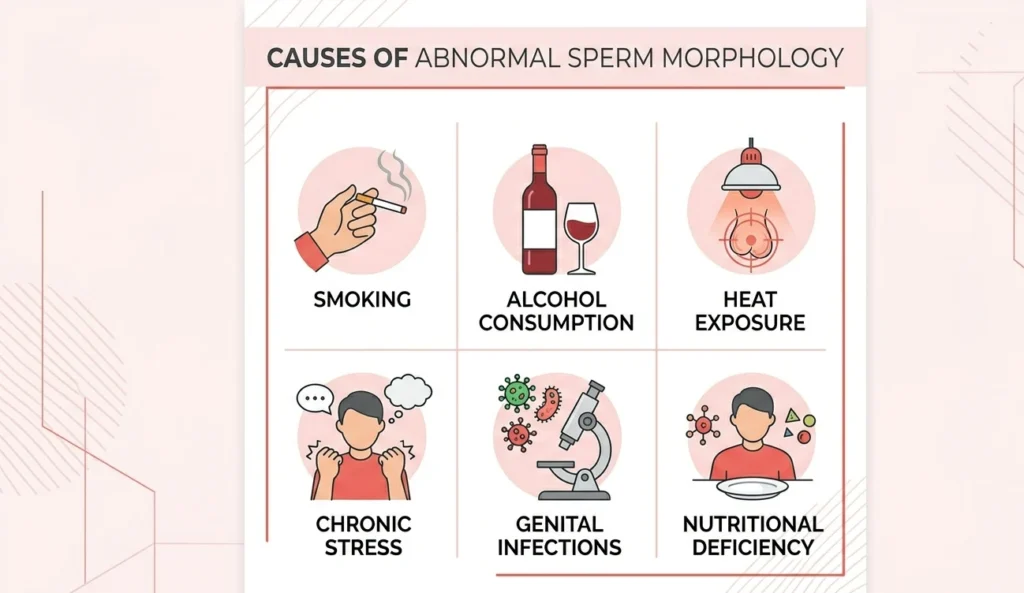
Here’s something important to understand: sperm morphology normal range values are not fixed. They can change for better or worse based on a wide range of lifestyle and environmental factors.
It takes approximately 72 to 90 days for new sperm to matureHow to Increase Sperm Count Naturally: 12 Proven Nutrition Strategies. This means that changes you make today can start to show up in your semen analysis results about three months from now.
Common Causes of Poor Sperm Morphology
- Heat exposure — tight underwear, hot tubs, laptops on the lap
- Smoking cigarettes or using recreational drugs
- Excessive alcohol consumption
- Varicocele (enlarged veins in the scrotum)
- Nutritional deficiencies — especially zinc, folate, selenium, and antioxidants
- Hormonal imbalances — low testosterone, elevated FSH
- Infections or sexually transmitted diseases
- Exposure to environmental toxins, pesticides, heavy metals
- High levels of chronic stress and poor sleep
- Obesity and metabolic syndrome
Can Genetics Affect Sperm Morphology?
In some cases, yes. Certain genetic conditions like Y chromosome microdeletions or chromosomal abnormalities can permanently affect sperm shape and production.
However, for the majority of men with poor morphology, the cause is lifestyle-related or environmental, which is actually good news because it means there is real room for improvement.
How Is Sperm Morphology Normal Range Measured?
Sperm morphology is evaluated as part of a comprehensive semen analysishttps://www.mayoclinic.org/tests-procedures/semen-analysis/about/pac-20384745. A trained lab technician or andrologist examines a stained sperm sample under a microscope and classifies each sperm as normal or abnormal based on strict visual criteria.
What Makes a Sperm ‘Normal’ Under the Microscope?
Head
The head should be smooth, oval-shaped, and 3 to 5 micrometers in width and 5 to 8 micrometers in length. The acrosome a cap-like structure on the head should cover 40–70% of the head area. This acrosome is critical for egg penetration.
Midpiece
The midpiece connects the head to the tail. It should be slender, well-defined, and roughly 1.5 times the length of the head. A healthy midpiece contains mitochondria that power the sperm’s swim.
Tail
The tail should be single, straight or slightly curved, and around 45 micrometers long. Coiled, kinked, or absent tails are considered abnormal.
Common Abnormalities Identified
- Large or small heads (macrocephaly / microcephaly)
- Round heads without an acrosome (globozoospermia)
- Double heads or double tails
- Bent or coiled tails
- Cytoplasmic droplets on the midpiece
How to Improve Sperm Morphology Naturally
Because sperm morphology normal range is influenced by lifestyle factors, dietary and behavioral changes can make a meaningful difference over time.
Here are evidence-informed strategies that support healthy sperm formation:
Nutrition and Diet
A nutrient-rich diet is one of the most powerful tools for improving sperm morphology. Focus on:
- Zinc — found in pumpkin seeds, beef, legumes; supports testosterone and sperm production
- Folate — leafy greens, lentils; helps reduce DNA fragmentation in sperm
- Selenium — Brazil nuts, tuna; protects sperm from oxidative damage
- Vitamin C and E — citrus fruits, almonds, sunflower seeds; powerful antioxidants
- Omega-3 fatty acids — walnuts, fatty fish; support sperm membrane integrity
- Lycopene — tomatoes, watermelon; shown to improve sperm morphology in studies
Lifestyle Changes That Support Sperm Health
- Quit smoking — smoking is directly linked to increased sperm abnormalities
- Reduce alcohol — limit to no more than 1–2 drinks per day
- Maintain a healthy weight — obesity is associated with hormonal imbalances that impair sperm
- Switch to loose-fitting underwear and avoid heat in the groin area
- Manage stress — cortisol can suppress reproductive hormones
- Exercise regularly — moderate exercise improves testosterone levels
- Sleep 7 to 9 hours per night — testosterone is produced during deep sleep
Supplements That May Help
Certain evidence-based supplements are commonly recommended by fertility specialists:
- CoQ10 (Coenzyme Q10) — improves mitochondrial function in sperm
- L-carnitine — supports energy metabolism in the sperm midpiece
- NAC (N-acetyl cysteine) — reduces oxidative stress
- Ashwagandha — adaptogenic herb with some evidence for improving sperm parameters
Note: Always consult a healthcare professional or certified supplement specialist before starting any new supplement regimen.
When Should You See a Fertility Specialist?
If your sperm morphology normal range score falls below the WHO lower reference limit of 4%, or if you have been trying to conceive for 12 months (or 6 months if your partner is over 35) without success, it’s time to consult a urologist or fertility specialist.
A reproductive endocrinologist can run additional tests to identify the root cause, including hormone panels, genetic testing, and a physical exam to check for varicocele.
Treatment Options for Teratozoospermia
- Treating the underlying cause (varicocele repair, hormone therapy)
- Lifestyle and dietary interventions
- Intrauterine insemination (IUI) — can work with mild teratozoospermia
- IVF with ICSI — directly injects a single sperm into the egg; particularly effective for severe cases
It’s worth noting that many couples with low morphology do conceive naturally, especially when other sperm parameters (count and motility) are within range.
Frequently Asked Questions (FAQ)
Q1: What is the normal range for sperm morphology according to WHO?
According to the World Health Organization (WHO), the lower reference limit for normal sperm morphology is 4%. This means that if 4% or more of your sperm have a normal shape, your morphology is considered within the acceptable range for natural fertility.
Q2: Can sperm morphology normal range results improve over time?
Yes — and this is one of the most encouraging aspects of sperm morphology normal range assessments. Since it takes around 72 to 90 days for sperm to develop, meaningful lifestyle changes like improving diet, quitting smoking, reducing heat exposure, and taking targeted supplements can improve your results in as little as three months.
Q3: Is 1% sperm morphology normal?
No, 1% normal sperm morphology is below the WHO’s lower reference limit of 4% and would be classified as moderate to severe teratozoospermia. This does not mean conception is impossible, but it may make natural conception more challenging, and assisted reproductive techniques like IVF with ICSI may be recommended.
Q4: What is the difference between Kruger morphology and WHO morphology?
Both are grading systems used to classify sperm shape, but they differ in their strictness. The WHO criteria set the lower limit at 4% normal forms. The Kruger strict criteria is more detailed it classifies anything above 14% as a good prognosis, 4–14% as fair, and below 4% as poor. Kruger criteria are commonly used in IVF settings.
Q5: Can I get pregnant naturally if morphology is below normal range?
Yes, many couples conceive naturally even when morphology is below the normal range, especially if sperm count and motility are normal. Morphology is just one parameter of fertility. A fertility specialist can give you a complete picture based on all semen analysis parameters combined.
Q6: Does age affect sperm morphology normal range results?
Yes. Sperm morphology tends to decline with age, particularly after age 40. This is partly due to increased oxidative stress and decreased antioxidant protection in older men. However, age-related decline is gradual, and many older men still have healthy morphology.
Q7: How many times should a semen analysis be repeated?
Most fertility specialists recommend repeating a semen analysis at least twice, ideally 2 to 3 months apart, before drawing conclusions. Sperm quality can vary significantly from sample to sample based on illness, stress, or lifestyle factors in the preceding 90 days.
Q8: Does diet really affect sperm morphology?
Yes, research clearly supports the connection between diet and sperm morphology normal range outcomes. Diets rich in antioxidants (vitamin C, E, selenium, lycopene), omega-3 fatty acids, zinc, and folate are associated with higher percentages of normally shaped sperm. Conversely, diets high in processed foods, trans fats, and alcohol are associated with lower morphology scores.
Final Thoughts
Sperm morphology normal range is an important but often misunderstood piece of the male fertility puzzle. The good news is that for most men, poor morphology is not a permanent condition. It’s something that can be measured, understood, and actively improved.
Focus on giving your body the nutrients it needs, reduce your exposure to heat and toxins, manage your stress, and give yourself at least 90 days to see the results of your efforts.
If you’ve been trying to conceive and morphology is a concern, don’t wait too long to speak with a specialist. Early intervention can make a big difference.
And remember fertility is a two-person journey. Always evaluate both partners’ health together.
Disclaimer
Medical Disclaimer: This article is written for informational and educational purposes only. It is not intended to be a substitute for professional medical advice, diagnosis, or treatment.
Always seek the guidance of a qualified healthcare provider or fertility specialist before making any decisions about your health. The information provided here is based on current research and general nutritional knowledge, but individual health conditions vary.
Never disregard professional medical advice or delay seeking it because of something you have read on this blog.
References & Authoritative Sources
1. WHO Laboratory Manual for Examination and Processing of Human Semen, 6th Edition — who.int
2. Kruger TF et al. — Sperm morphology assessment: Strict criteria. Fertility and Sterility — PubMed/NIH
3. National Institute of Child Health and Human Development (NICHD) — nichd.nih.gov
4. Mayo Clinic — Male infertility: Causes and treatment — mayoclinic.org
5. Agarwal A et al. — Male oxidative stress infertility (MOSI): Proposed terminology and clinical practice guidelines — PMC/PubMed