
How much fiber in apple is there, really? If you’ve ever stood in the grocery aisle wondering whether an apple a day is doing much for your digestion, you’re not alone. Apples are one of the most popular fruits on the planet, and fiber is the main reason nutritionists keep recommending them. But the actual number surprises a lot of people ,it’s not as high as you’d think, and it changes depending on the size, variety, and whether you eat the skin.
In this guide, we’ll break down exactly how much fiber in apple you get per serving, how that compares to other fruits, and how to make the most of it in your daily diet.
How Much Fiber in Apple: The Quick Answer
A medium-sized apple (about 182 grams, skin on) contains roughly 4.4 grams of dietary fiber. That’s about 16% of the recommended daily fiber intake for most adults.
Here’s a quick breakdown by apple size:
| Apple Size | Approx. Weight | Fiber Content |
| Small apple | 149 g | ~3.6 g fiber |
| Medium apple | 182 g | ~4.4 g fiber |
| Large apple | 223 g | ~5.4 g fiber |
| 1 cup, sliced | 109 g | ~2.6 g fiber |
So when someone asks how much fiber in apple servings actually add up to, the honest answer is: it depends heavily on portion size. A single large apple can get you more than a third of the way to a good chunk of your daily target, while a small one contributes a more modest amount.
How Much Fiber in Apple: Skin On vs Peeled
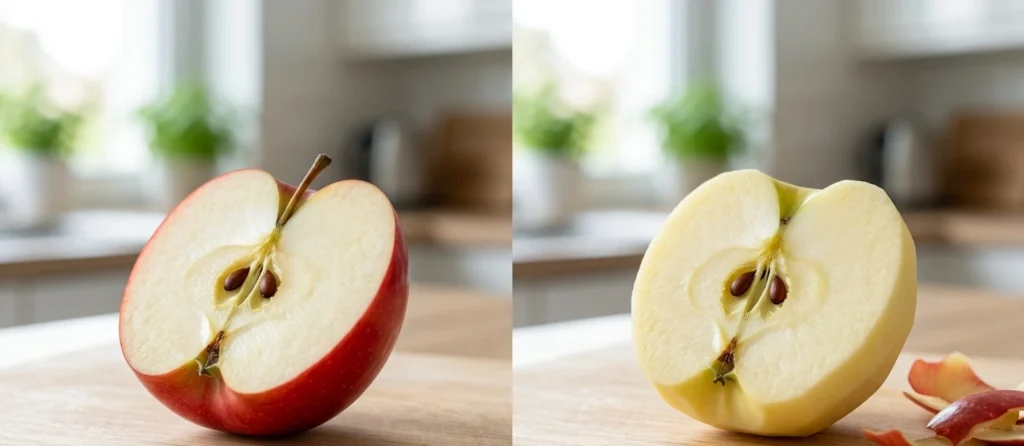
This is where things get interesting. Most of the fiber in an apple sits in and just beneath the skin.
Fiber in Apple With the Skin
A medium apple eaten whole, skin included, gives you close to 4.4 grams of fiber. The skin itself is packed with insoluble fiber, along with antioxidants like quercetin.
Fiber in Apple Without the Skin
Peel that same apple, and the fiber content drops to around 2.1 grams — roughly half. If you’re peeling your apples out of habit, you’re leaving a lot of fiber (and nutrients) on the cutting board.
So if your goal is maximizing how much fiber in apple you eat, skip the peeler and just wash the apple well before biting in.
How Much Fiber in Apple by Variety
Not all apples are created equal. Fiber content shifts slightly depending on the variety, mostly because of differences in size and skin thickness.
| Apple Variety | Fiber per Medium Apple (approx.) |
| Granny Smith | ~4.6 g |
| Fuji | ~4.3 g |
| Gala | ~4.0 g |
| Honeycrisp | ~4.2 g |
| Red Delicious | ~4.4 g |
The differences are small enough that variety shouldn’t be your main deciding factor. Size and whether you keep the skin on matter far more than which type you pick.
Types of Fiber in Apple: Soluble vs Insoluble
Fiber isn’t just one thing, and understanding the two types helps explain why apples are considered such a balanced fiber source.
Soluble fiber dissolves in water and forms a gel-like substance in your gut. Apples get most of their soluble fiber from pectin, which is concentrated in the flesh. This type of fiber is linked to slower digestion, steadier blood sugar, and lower cholesterol.
Insoluble fiber doesn’t dissolve and instead adds bulk to stool, helping food move through your digestive tract. This is mostly found in the skin.
An apple gives you roughly a 3-to-1 ratio of insoluble to soluble fiber, which is one reason it’s often used as an example of a well-rounded fiber source in nutrition guides.
How Much Fiber in Apple Compared to Other Fruits
It helps to see how apples stack up against other common fruits when you’re trying to plan a fiber-rich diet.https://fdc.nal.usda.gov/
| Fruit (medium serving) | Fiber Content |
| Apple | ~4.4 g |
| Pear | ~5.5 g |
| Banana | ~3.1 g |
| Orange | ~3.1 g |
| Raspberries (1 cup) | ~8 g |
Apples aren’t the single highest-fiber fruit on the shelf, but they’re consistently near the top, easy to carry, require no prep, and are eaten far more regularly than most other high-fiber fruits , which is exactly why “how much fiber in apple” is such a common search.
Health Benefits of Fiber in Apple
Knowing how much fiber in apple you’re eating is only half the story. What that fiber actually does in your body is where the real value lies. How Much Fiber Per Day for Weight Loss: The Complete Science-Backed Guide
Digestive Health
The insoluble fiber in apple skin adds bulk to stool and supports regular bowel movements, which is why apples are often suggested as a gentle remedy for occasional constipation.
Heart Health
Soluble fiber, especially pectin, binds to cholesterol particles in the digestive tract and helps remove them from the body. Regular apple consumption has been associated with modestly lower LDL cholesterol in several studies.
Blood Sugar Control
Because fiber slows down digestion, the natural sugars in apples are absorbed more gradually than sugar from juice or processed snacks. This is one reason whole apples have a much lower impact on blood sugar than apple juice.
Weight Management
Fiber-rich foods take longer to chew and digest, which naturally supports fullness. A medium apple is under 100 calories yet delivers enough fiber to help curb between-meal snacking.
How Much Fiber Do You Need Daily — and How Apple Fits In
General fiber recommendations are around 25 grams per day for women and 38 grams per day for men, though needs vary by age and activity level.https://www.mayoclinic.org/healthy-lifestyle/nutrition-and-healthy-eating/in-depth/fiber/art-20043983
Given that a medium apple provides about 4.4 grams, one apple alone covers roughly 12–17% of a typical adult’s daily fiber needs. Pair it with vegetables, whole grains, and legumes throughout the day, and hitting your fiber target becomes far more realistic.
Tips to Get More Fiber From Your Apple
- Eat the apple whole with the skin on instead of peeling it.
- Choose larger apples if you’re specifically trying to boost fiber intake.
- Pair apple slices with nut butter , this doesn’t add fiber, but it slows digestion further, extending fullness.
- Avoid apple juice if fiber is your goal, since juicing removes almost all of it.
- Add chopped apple to oatmeal or salads to stack fiber sources in one meal.
Does Cooking or Juicing Affect Fiber in Apple?
Cooking an apple baking or stewing, for example barely changes its total fiber content. Heat breaks down some of the fiber structure, which can make it easier to digest, but the grams of fiber stay roughly the same.
Juicing is a different story. Since juicing strips away the pulp and skin, apple juice contains only a trace of fiber compared to the whole fruit. If you care about how much fiber in apple you’re actually consuming, whole or blended (smoothie-style) is far better than juiced.How Much Calories in Apple? Full Nutrition Breakdown
Final Thoughts
So, how much fiber in apple can you realistically expect? Around 4.4 grams for a medium apple with the skin on a meaningful, easy contribution toward your daily fiber goal, especially when you consider how simple apples are to eat on the go. Keep the skin on, choose a decent-sized apple, and you’re getting one of the most convenient fiber sources available in any grocery store.
Frequently Asked Questions
How much fiber in apple is there without the skin?
A medium peeled apple contains around 2.1 grams of fiber roughly half of what you’d get eating it with the skin on.
How much fiber in one apple a day is enough?
One medium apple provides about 4.4 grams of fiber, covering roughly 12–17% of most adults’ daily fiber needs. It’s a helpful contribution but shouldn’t be your only fiber source.
Which apple variety has the most fiber?
Granny Smith apples tend to have slightly more fiber than other common varieties, though the difference between varieties is generally small.
Does apple juice have fiber?
Very little. Juicing removes the pulp and skin, which is where most of an apple’s fiber is concentrated, leaving the juice with only trace amounts.
Is apple fiber soluble or insoluble?
Apples contain both. The flesh is rich in soluble fiber (mainly pectin), while the skin contains most of the insoluble fiber.
How does apple fiber compare to other fruits?
Apples sit in the mid-to-upper range among common fruits less fiber than a pear or raspberries, but more than a banana or orange.
Disclaimer: This article is for general informational purposes only and is not a substitute for professional medical or dietary advice.
Fiber content values are approximate averages and can vary based on apple size, variety, ripeness, and growing conditions. Please consult a registered dietitian or healthcare provider before making significant changes to your diet.