
How much calories in apple is one of the most common questions asked by anyone trying to eat healthier or track their daily food intake. Apples are one of the most popular fruits in the world, and they are often the first snack people reach for when they want something light, sweet, and filling. But before you bite into your next apple, it helps to know exactly what you are putting into your body.
In this guide, we will break down the calorie count of apples by size, by variety, and by preparation method. We will also look at the full nutritional profile of this fruit, its health benefits, and how it fits into a weight-loss plan. By the end of this article, you will never have to guess the calorie count of your favorite fruit again.
How Much Calories in Apple by Size
The honest answer to this question depends heavily on the size of the fruit you are eating. Apples are not sold in a single fixed size, so the calorie count changes noticeably from one piece to another. Understanding portion size is the first step toward accurate calorie tracking.
Small Apple Calories
A small apple, roughly the size of a tennis ball and weighing around 150 grams, contains approximately 80 calories. This is the ideal portion for anyone counting calories closely or pairing the fruit with a snack like peanut butter or cheese. It also travels well in a lunch bag without adding too much bulk.
Medium Apple Calories
A medium apple, weighing about 180 to 200 grams, is the most common size found in grocery stores. This size typically contains 95 to 100 calories. When people casually ask about apple calories without specifying a size, this medium range is usually the number they are looking for, since it represents the average fruit sold at most supermarkets.https://fdc.nal.usda.gov
Large Apple Calories
A large apple, weighing around 220 to 250 grams, can contain anywhere from 115 to 130 calories. If you are buying jumbo apples from the store, keep this higher number in mind, especially if you are tracking macros for a specific diet plan or working with a strict daily calorie budget.
Apple Calories by Variety
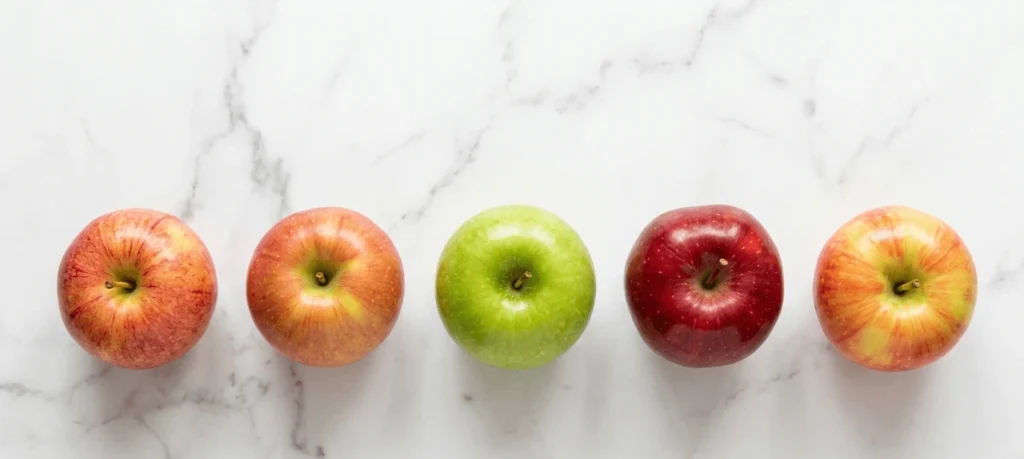
Another factor that affects the total calorie count is the variety of the fruit itself. While the difference between varieties is small, it can still matter for precise calorie tracking, particularly if you eat apples every day.
Gala Apple Calories
A medium Gala apple contains around 90 to 95 calories. Gala apples are smaller and sweeter, which makes them a favorite for kids and quick snacking throughout the day.
Fuji Apple Calories
Fuji apples tend to be larger and denser, so a medium Fuji apple usually has about 100 to 110 calories. Their crisp texture and higher natural sugar content make them slightly heavier in calories than other common varieties.
Granny Smith Apple Calories
Granny Smith apples are tart and slightly less sweet, containing roughly 85 to 95 calories per medium fruit. This variety is popular among people who prefer a less sugary snack option and a firmer bite.
Red Delicious Apple Calories
A medium Red Delicious apple has about 95 to 100 calories, placing it right in the middle of the calorie range for common apple varieties sold in stores today.
Honeycrisp Apple Calories
Honeycrisp apples are known for their large size and juicy bite, and they typically contain 110 to 120 calories per medium fruit, making them one of the higher-calorie apple varieties available.
Apple Calories Compared to Other Popular Fruits
To put things in perspective, it helps to compare an apple against other popular fruits people eat daily.
- Banana (medium): 105 calories
- Orange (medium): 62 calories
- Pear (medium): 100 calories
- Peach (medium): 58 calories
- Grapes (1 cup): 104 calories
As you can see, apples sit comfortably in the middle of the calorie range for fruit, making them a balanced choice for most eating plans and daily routines.
Apple Calories in Common Household Servings
Not everyone measures fruit by size alone, so it helps to know the calorie count in everyday servings too. A single cup of sliced, raw apple with the skin on contains roughly 65 calories, while a cup of chopped apple weighs slightly more and comes in around 70 to 75 calories. If you use apples in cooking, one cup of unsweetened apple sauce contains about 100 calories, and a cup of stewed apple with a touch of cinnamon stays close to the same range as long as no sugar is added.
For anyone who prefers grab-and-go snacks, a small bag of pre-sliced apples sold at most grocery stores usually weighs around 100 grams and contains close to 52 calories. Knowing these common serving sizes makes it easier to log meals accurately in a food diary or calorie-tracking app without having to weigh every piece of fruit individually.
Factors That Influence Apple Calorie Count
Several factors beyond size and variety can slightly change the total calorie count of an apple. Ripeness plays a role, since a riper apple tends to have slightly higher natural sugar content, which can add a few extra calories. Growing conditions such as sunlight, soil quality, and water availability also influence how much natural sugar develops in the fruit before harvest.
Storage time matters as well. Apples that have been stored for several months tend to lose a small amount of water content, which can concentrate the sugars slightly and raise the calorie count per gram. This is why a freshly picked apple and one that has been in cold storage for months may show a small difference in calories, even if they are the same variety and size.
Full Nutritional Breakdown of a Medium Apple
Knowing the calorie count is only part of the picture. Here is the complete nutrition profile for one medium apple, about 182 grams, eaten with the skin on.
| Nutrient | Amount |
| Calories | 95 |
| Carbohydrates | 25 grams |
| Dietary Fiber | 4.4 grams |
| Sugar | 19 grams |
| Protein | 0.5 grams |
| Fat | 0.3 grams |
| Vitamin C | 14% of Daily Value |
| Potassium | 6% of Daily Value |
This table shows that apart from calories, apples are a strong source of fiber and vitamin C, both of which support digestion and immune health throughout the day.
Does Apple Skin Change the Calorie Count?
Many people wonder if peeling an apple changes the total calorie count they are actually consuming. The truth is, the skin adds very little in terms of calories, usually less than 5 calories difference between peeled and unpeeled fruit. However, the skin holds a large portion of the fiber and antioxidants, so eating the apple unpeeled is generally the healthier option if you want the full nutritional benefit of the fruit.
Apple Juice vs Whole Apple Calories
A common mistake is assuming apple juice has the same calorie count as a whole apple. In reality, one cup of unsweetened apple juice contains around 114 calories, which is similar to a whole fruit, but it lacks the fiber that slows sugar absorption. This means apple juice can spike blood sugar faster than eating the whole fruit. Whichever way you consume it, the whole fruit will always keep you fuller for longer thanks to its natural fiber content, so it is generally the smarter choice for anyone watching their weight.
Dried Apple and Baked Apple Calories
It is also worth mentioning how cooking or drying changes the numbers. A quarter cup of dried apple slices contains around 100 calories, since removing the water concentrates both the sugar and the calories into a smaller portion. A baked apple with a teaspoon of cinnamon and no added sugar stays close to the raw fruit’s calorie count, usually around 100 to 110 calories, making it a comforting low-calorie dessert option.
Health Benefits of Apples Beyond the Calorie Count
While knowing the calorie count is useful for tracking intake, apples offer benefits that go far beyond a single number on a nutrition label.
Supports heart health: The soluble fiber in apples, known as pectin, helps lower LDL cholesterol levels over time when eaten regularly.
Aids digestion: The fiber content promotes regular bowel movements and supports a healthy gut microbiome. How Much Fiber Per Day for Weight Loss: The Complete Science-Backed Guide
Boosts immunity: Vitamin C in apples helps strengthen the immune system and supports overall skin health.
Stabilizes blood sugar: The natural fiber slows down sugar absorption, helping prevent sharp blood sugar spikes after eating.
Promotes fullness: Because apples are low in calories but high in fiber and water content, they help you feel full without adding excess calories to your day.https://nutritionsource.hsph.harvard.edu/food-features/apples/
How Much Calories in Apple for Weight Loss
If you are on a weight-loss journey, understanding the calorie count of the fruits you eat can help you plan smarter snacks throughout the week. A medium apple at roughly 95 calories is an excellent low-calorie, high-fiber snack that keeps hunger at bay far longer than processed snacks with a similar calorie count.
Here are a few practical tips for using apples in a weight-loss plan:
- Eat the whole apple instead of drinking apple juice to benefit from the fiber content.
- Pair an apple with a small portion of protein, like a tablespoon of almond butter, to stay full longer.
- Choose smaller apple varieties like Gala if you want to keep your snack on the lower end of the calorie range.
- Avoid caramel or sugar coatings, which can double or triple the calorie count of a plain apple.
- Keep sliced apples in the fridge so a low-calorie snack is always within easy reach.How Much Fiber in Avocado? The Complete Guide You Need to Read
Tips to Include Apples in Your Daily Diet
Once you understand the calorie count, it becomes much easier to plan meals around this fruit. Try slicing apples into your morning oatmeal, adding them to a leafy green salad, or simply keeping one in your bag as a portable snack. Because apples are low in calories and rich in fiber, they fit naturally into almost any eating pattern, whether you are following a calorie deficit, a balanced diet, or simply trying to eat more whole foods every day.
Final Thoughts
So, how much calories in apple? The short answer is that a medium apple contains about 95 calories, though this number can range from 80 to 130 calories depending on the size and variety you choose. Apples remain one of the best low-calorie, nutrient-dense fruits available, offering fiber, vitamin C, and natural sweetness without the calorie load of many processed snacks. The next time you reach for one, you will know exactly what you are adding to your day.
Frequently Asked Questions
How much calories in apple with skin on?
A medium apple with the skin on contains about 95 calories, along with extra fiber and antioxidants that are lost if the skin is removed.
How many calories are in a peeled apple?
A peeled medium apple contains roughly 90 calories, only slightly less than an apple with the skin left on.
How many calories are in an apple a day if eaten regularly?
Eating one to two medium apples per day, totaling around 95 to 200 calories, is considered a healthy and balanced amount for most adults.
How much calories in apple slices with peanut butter?
A medium sliced apple with two tablespoons of peanut butter adds around 190 to 200 calories in total, making it a filling and nutritious snack.
Is the calorie count in apple higher or lower than a banana?
A medium apple has about 95 calories, while a medium banana has about 105 calories, making apples slightly lower in calories.
Do green apples have fewer calories than red apples?
Green apples like Granny Smith are only marginally lower in calories than red varieties, with the difference usually being less than 10 calories per fruit.
.
Disclaimer
This article is for general informational and educational purposes only and is not intended as medical or nutritional advice. Calorie and nutrient values are approximate and can vary based on apple variety, size, ripeness, and growing conditions. Always consult a qualified healthcare provider or registered dietitian before making changes to your diet, especially if you have a medical condition or specific dietary needs.