
The difference between PCOS and PCOD is one of the most searched and most misunderstood topics in women’s health today. If you’ve ever been handed a diagnosis and walked out of the clinic more confused than when you walked in, you’re not alone.
Most people use these two terms interchangeably. Even some doctors do. But here’s the truth: PCOS and PCOD are not the same condition. They share similarities, yes but they differ in causes, severity, and long-term health impact.
In this guide, we’re going to break it all down in plain language. No medical jargon overload. Just real, useful information to help you understand what’s happening in your body and what to do about it.
Whether you’ve just received a diagnosis or you’re trying to understand a friend’s condition, this article will walk you through everything from what PCOS and PCOD actually mean, to how they’re diagnosed, treated, and managed day to day.
What Is PCOD? A Closer Look at Polycystic Ovarian Disease
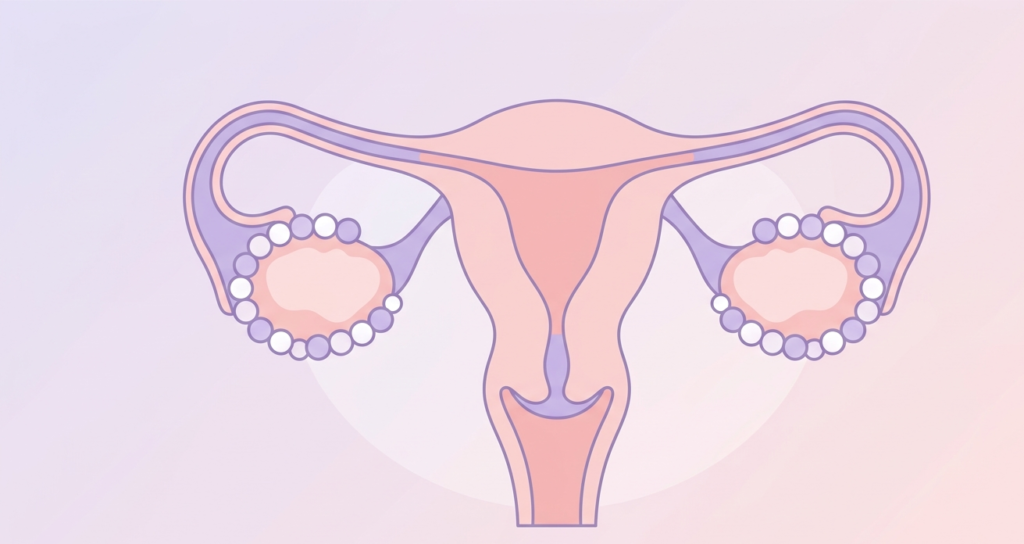
PCOD stands for Polycystic Ovarian Disease. It is a condition where the ovaries release immature or partially mature eggs, which over time can develop into cysts. These cysts accumulate in the ovaries, causing them to enlarge.
The good news? PCOD is relatively common and, in many cases, manageable with lifestyle changes and basic medical care. It doesn’t always require heavy intervention.
What Happens Inside the Ovaries with PCOD?
Normally, each month one of your ovaries releases a mature egg during ovulation. With PCOD, the eggs don’t always reach full maturity before being released. These immature eggs sit in the ovaries and can form small cysts which is where the “polycystic” part of the name comes from.
The result? Irregular periods, mild hormonal imbalance, and slight ovarian enlargement. But here’s the key point PCOD does not drastically affect ovulation in most cases. Many women with PCOD still ovulate and can conceive naturally.
Common Symptoms of PCOD
- Irregular or delayed menstrual cycles
- Mild weight gain, especially around the abdomen
- Acne or oily skin
- Mild hair thinning
- Bloating or discomfort in the lower abdomen
- Mood swings around the period
These symptoms are often manageable and may respond well to diet changes, regular exercise, and, in some cases, hormonal contraceptives to regulate the cycle.
What Is PCOS? Understanding Polycystic Ovary Syndrome
PCOS stands for Polycystic Ovary Syndrome. Unlike PCOD, PCOS is a metabolic and endocrine disorder meaning it affects far more than just the ovaries. It involves a significant hormonal imbalance that disrupts multiple systems in the body.
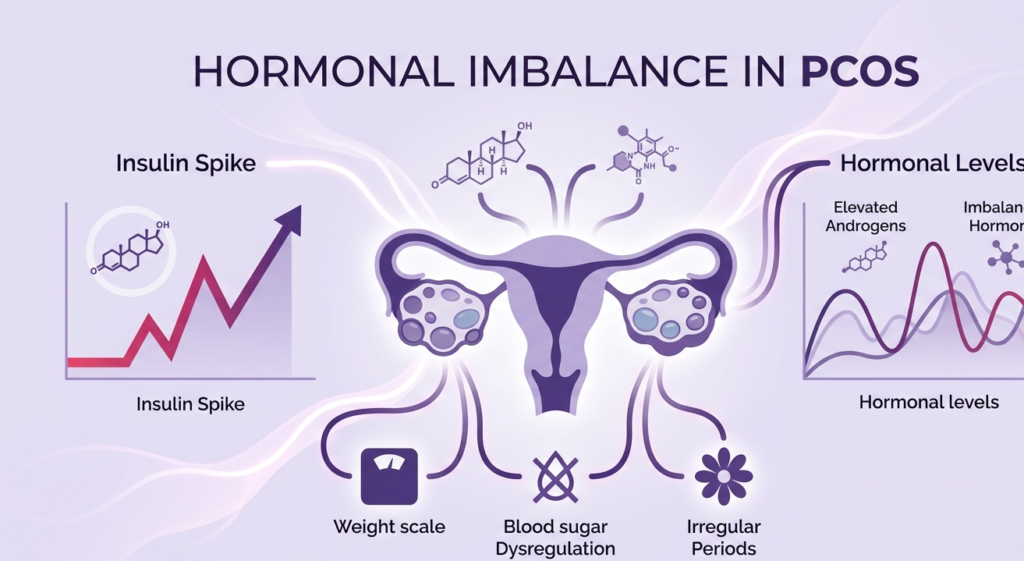
PCOS is characterised by higher-than-normal levels of androgens (male hormones) in the female body. This hormonal surge is what sets PCOS apart and what makes it more serious.
What Happens in the Body with PCOS?
With PCOS, the body produces excess androgens hormones like testosterone which interfere with the development and release of eggs. As a result, ovulation may be irregular or completely absent. This leads to cysts forming in the ovaries, but the root cause here is systemic hormonal dysfunction, not just an ovarian issue.
PCOS also often involves insulin resistance a condition where the body’s cells don’t respond properly to insulin. This can lead to elevated blood sugar levels and increases the risk of Type 2 diabetes.
Common Symptoms of PCOS
- Irregular, infrequent, or absent periods
- Excess facial or body hair (hirsutism)
- Significant weight gain or difficulty losing weight
- Severe acne, often along the jawline and chin
- Thinning of hair on the scalp (female pattern baldness)
- Darkening of skin in folds (acanthosis nigricans)
- Difficulty conceiving — fertility issues are more pronounced
- Mood disorders including anxiety and depression
- Sleep disorders, including sleep apnea in some cases
PCOS requires more targeted medical management, often involving hormonal therapy, insulin-sensitising medications like Metformin, and long-term lifestyle adjustments.https://www.mayoclinic.org/diseases-conditions/pcos/symptoms-causes/syc-20353439
Difference Between PCOS and PCOD: A Side-by-Side Comparison
Now that we understand both conditions individually, let’s get into the core difference between PCOS and PCOD in a clear, structured way.
| Feature | PCOD | PCOS |
| Full Name | Polycystic Ovarian Disease | Polycystic Ovary Syndrome |
| Nature | Ovarian condition | Endocrine/Metabolic disorder |
| Cause | Hormonal imbalance, poor diet, stress | Genetic + metabolic dysfunction |
| Prevalence | More common | Less common but more serious |
| Hormonal Imbalance | Mild | Significant (high androgens) |
| Ovulation | Usually present (irregular) | Often absent or severely irregular |
| Fertility Impact | Mild most can conceive | More significant may need fertility treatment |
| Insulin Resistance | Not typically involved | Commonly associated |
| Diabetes Risk | Low | Higher risk of Type 2 diabetes |
| Weight Gain | Mild to moderate | More significant, harder to lose |
| Treatment | Lifestyle changes, mild medication | Hormonal therapy, Metformin, lifestyle |
| Reversibility | More manageable | Chronic but controllable |
As you can see from the table above, the difference between PCOS and PCOD goes well beyond names. PCOD is primarily an ovarian issue with manageable symptoms, while PCOS is a broader systemic disorder with wider health consequences.
The Root Causes: Why the Difference Between PCOS and PCOD Matters
Causes of PCOD
PCOD doesn’t have a single definitive cause. Instead, it’s believed to be triggered by a combination of lifestyle and hormonal factors:
- Poor diet high in refined carbohydrates and sugar
- Sedentary lifestyle with little physical activity
- Chronic stress, which disrupts cortisol and hormonal balance
- Hormonal fluctuations during puberty or early adulthood
- Genetic predisposition in some cases
The encouraging thing about PCOD is that lifestyle-driven causes mean that lifestyle-driven solutions can significantly reduce symptoms.
Causes of PCOS
PCOS has a more complex origin. Research suggests it’s rooted in:
- Genetic factors : PCOS tends to run in families
- Insulin resistance : when cells fail to use insulin efficiently, the body produces more, which triggers androgen productionhttps://pubmed.ncbi.nlm.nih.gov/9371463/
- Low-grade inflammation : studies show women with PCOS often have elevated inflammatory markers
- Hypothalamic-pituitary dysfunction : problems with the hormonal signals from the brain to the ovaries
Because PCOS involves multiple systems reproductive, metabolic, and hormonal it requires a more comprehensive treatment approach than PCOD.
How Are PCOS and PCOD Diagnosed?
Diagnosis is another area where the difference between PCOS and PCOD becomes important. The tests used are often similar, but the criteria and thresholds differ.
Diagnosing PCOD
Doctors typically diagnose PCOD through:
- Pelvic ultrasound : to check for enlarged ovaries with multiple small cysts
- Blood tests : to measure hormone levels (FSH, LH, estrogen, progesterone)
- Medical history and symptom review
With PCOD, the ultrasound usually shows mildly enlarged ovaries with several follicular cysts. Hormone levels may be slightly off, but rarely severely imbalanced.
Diagnosing PCOS
PCOS diagnosis often follows the Rotterdam Criteria, where at least two of the following three must be present:
- Irregular or absent ovulation (irregular menstrual cycles)
- Signs of high androgen levels : clinically (excess hair, acne) or through blood tests
- Polycystic ovaries on ultrasound
Additional tests for PCOS may include fasting glucose, insulin levels, lipid profile, thyroid function tests, and AMH (Anti-Mullerian Hormone) levels. PCOS diagnosis is more thorough because it’s a metabolic disorder.
Treatment Approaches: Managing the Difference Between PCOS and PCOD
Managing PCOD
PCOD responds well to conservative management:
- Healthy, balanced diet with reduced processed foodsPCOD Food List to Avoid: What Every Woman Needs to Know in 2025
- Regular exercise : even 30 minutes of walking daily helps
- Stress management through yoga, meditation, or counselling
- Oral contraceptives to regulate menstrual cycles (if prescribed)
- Maintaining a healthy weight
Many women see a significant improvement in PCOD symptoms within a few months of lifestyle changes alone. It is not a condition that necessarily requires lifelong medication.
Managing PCOS
PCOS management is more structured and often involves:
- Hormonal therapy : birth control pills, progestins, or anti-androgens like Spironolactone
- Metformin : an insulin-sensitising medication that helps regulate blood sugar and hormones
- Ovulation induction medications for women trying to conceive (like Clomiphene)
- Dietary changes focused on low glycaemic index foods
- Regular cardiovascular exercise to improve insulin sensitivity
- Mental health support : therapy or counselling for associated anxiety and depression
In severe cases, laparoscopic ovarian drilling a minimally invasive surgical procedure may be recommended to stimulate ovulation. PCOS is a long-term condition, but it is absolutely manageable with the right plan.
PCOS vs PCOD and Fertility: Can You Still Get Pregnant?
This is one of the most emotionally charged questions for women dealing with either condition. Let’s be clear and honest.
Fertility with PCOD
Women with PCOD generally do not face major fertility challenges. Since ovulation is usually still occurring (even if irregularly), natural conception is possible in most cases. With proper cycle tracking and lifestyle support, many women with PCOD conceive without medical intervention.
Fertility with PCOS
PCOS is one of the leading causes of female infertility globally. Because ovulation is often absent or severely irregular, getting pregnant can be more difficult. However and this is important PCOS does NOT mean infertility. Many women with PCOS do become pregnant, sometimes naturally and sometimes with fertility support.https://medlineplus.gov/polycysticovarysyndromeandpregnancy.html
Treatments like ovulation induction, IUI (Intrauterine Insemination), and IVF (In Vitro Fertilisation) have helped countless women with PCOS have healthy pregnancies.
The key is early diagnosis and ongoing management. The sooner PCOS is identified and treated, the better the fertility outcomes.
Common Myths About PCOS and PCOD — Debunked
Myth 1: PCOS and PCOD Are the Same Thing
False. As we’ve detailed throughout this article, the difference between PCOS and PCOD is significant in cause, severity, and treatment. Using them interchangeably leads to misdiagnosis and mismanagement.
Myth 2: You Can’t Get Pregnant If You Have PCOS
False. Difficult? Sometimes. Impossible? No. With appropriate medical support and lifestyle changes, pregnancy is achievable for most women with PCOS.
Myth 3: PCOD Is Not Serious, So It Can Be Ignored
False. While PCOD is generally less severe than PCOS, leaving it unmanaged can worsen hormonal imbalance over time and potentially progress.
Myth 4: Only Overweight Women Get PCOS
False. PCOS affects women of all body types, including lean women. Weight gain is a symptom in many cases not a prerequisite for the diagnosis.
Myth 5: Birth Control Pills Cure PCOS or PCOD
False. Contraceptive pills help manage symptoms like irregular periods and acne, but they don’t treat the underlying cause. Once stopped, symptoms often return without lifestyle management.
Frequently Asked Questions (FAQs)
Q1. What is the main difference between PCOS and PCOD?
The main difference between PCOS and PCOD lies in their nature and severity. PCOD is primarily an ovarian condition caused by lifestyle and mild hormonal imbalance, where the ovaries release immature eggs. PCOS, on the other hand, is a metabolic and endocrine disorder involving significantly elevated androgens, insulin resistance, and systemic hormonal dysfunction.
Q2. Is PCOS more serious than PCOD?
Yes, generally speaking, PCOS is considered more serious than PCOD. PCOS carries a higher risk of long-term complications including Type 2 diabetes, cardiovascular disease, endometrial cancer, and infertility. PCOD, while uncomfortable, is more manageable and often responds to lifestyle changes.
Q3. Can PCOD turn into PCOS?
This is a debated topic in the medical community. While some experts suggest that poorly managed PCOD could progress over time, there is currently no definitive clinical evidence that PCOD transforms into PCOS. They are distinct conditions, though they can overlap in symptoms.
Q4. At what age does PCOS or PCOD typically develop?
Both conditions typically appear during the reproductive years most commonly between the ages of 15 and 35. PCOD often emerges during late adolescence or early twenties. PCOS can also begin during puberty and is frequently diagnosed in the late teens to mid-thirties.
Q5. Does diet really make a difference for PCOS and PCOD?
Absolutely. Diet is one of the most powerful tools for managing both conditions. For PCOD, reducing refined carbs and increasing fibre can reduce cyst formation and regularise periods. For PCOS, a low glycaemic index diet helps regulate insulin levels, which directly impacts androgen production and menstrual regularity.
Q6. Can PCOS or PCOD go away on its own?
PCOD symptoms can reduce significantly and sometimes resolve with the right lifestyle changes. PCOS, however, is a chronic condition that does not go away on its own. It can be well-managed with the right treatment plan, but it requires ongoing attention throughout a woman’s reproductive years.
Q7. Is it possible to have both PCOS and PCOD?
Since PCOS encompasses polycystic ovaries as one of its criteria, a woman diagnosed with PCOS will often also display PCOD-like characteristics. However, they are typically treated as separate diagnoses. The treatment plan will be tailored to the more comprehensive condition PCOS if that is the confirmed diagnosis.
When Should You See a Doctor?
If you experience any of the following, it’s time to book an appointment with a gynaecologist or endocrinologist:
- Periods that are consistently irregular, late, or absent
- Excessive facial or body hair that is new or worsening
- Sudden weight gain with no clear dietary cause
- Acne that persists past your teenage years and doesn’t respond to skincare
- Difficulty conceiving after 6 to 12 months of trying
- Hair loss or significant thinning on the scalp
Don’t wait until symptoms become severe. Early diagnosis whether of PCOD or PCOS always leads to better outcomes. The difference between PCOS and PCOD matters most when it comes to treatment choices, and getting the right diagnosis is the first step.
Final Thoughts: The Difference Between PCOS and PCOD Is More Than a Name
Living with either PCOS or PCOD can be frustrating, confusing, and emotionally draining. But knowledge is genuinely empowering. Once you understand the difference between PCOS and PCOD, you can ask better questions, seek the right treatment, and make informed decisions about your health.
Here’s what to remember:
- PCOD is a relatively common ovarian condition with manageable symptoms
- PCOS is a more complex hormonal and metabolic disorder requiring comprehensive care
- Both conditions are real, both deserve medical attention, and both are treatable
- Lifestyle — diet, exercise, stress management — is the foundation of managing both
- Fertility is possible with both conditions, especially with the right support
If you’re navigating a diagnosis right now, please speak with a qualified medical professional. This article is meant to educate and empower not replace professional medical advice.
References
1. Rotterdam ESHRE/ASRM-Sponsored PCOS Consensus Workshop Group. (2004). Revised 2003 consensus on diagnostic criteria and long-term health risks related to polycystic ovary syndrome. Fertility and Sterility, 81(1), 19–25.
2. Azziz, R., et al. (2016). Polycystic ovary syndrome. Nature Reviews Disease Primers, 2, 16057.
3. Teede, H. J., et al. (2018). Recommendations from the international evidence-based guideline for the assessment and management of polycystic ovary syndrome. Human Reproduction, 33(9), 1602–1618.
4. World Health Organisation. (2023). Polycystic ovary syndrome. WHO Fact Sheets.
5. National Institute of Child Health and Human Development (NICHD). Polycystic Ovary Syndrome (PCOS). U.S. Department of Health and Human Services.
6. Dunaif, A. (1997). Insulin resistance and the polycystic ovary syndrome: Mechanism and implications for pathogenesis. Endocrine Reviews, 18(6), 774–800.
Medical Disclaimer
⚠ Disclaimer: This article is intended for general informational and educational purposes only. The content provided here does not constitute medical advice, diagnosis, or treatment.
The difference between PCOS and PCOD and their respective management strategies should always be discussed with a qualified healthcare provider a gynaecologist, endocrinologist, or your primary care physician. Every individual’s health situation is unique.
Do not disregard professional medical advice or delay seeking it based on information read in this article. If you think you may have PCOS, PCOD, or any related condition, please consult a licensed medical professional.