If you have been diagnosed with Polycystic Ovary Syndrome (PCOS) and you’re tired of conflicting advice online, you are not alone. The PCOS diet chart conversation is everywhere yet most content just scratches the surface. This guide is different. We go deep, we keep it practical, and we give you an actual day-by-day PCOS diet chart you can start using this week.
PCOS affects between 8% and 13% of women of reproductive age globally, according to the World Health Organization. Yet despite being so common, the dietary management of PCOS is still misunderstood by many. The right food choices can regulate your insulin levels, reduce androgen production, manage your weight, and even improve fertility without relying solely on medications.
Let’s break it all down in plain language.
What Is PCOS and Why Does Diet Matter So Much?
PCOS is a hormonal disorder where the ovaries produce excess androgens (male hormones). This leads to irregular periods, cysts on ovaries, acne, unwanted hair growth, weight gain, and fertility issues. But here is the thing many people don’t talk about enough up to 70% of women with PCOS have insulin resistance.
Insulin resistance means your cells don’t respond properly to insulin, so your pancreas pumps out more and more of it. High insulin signals your ovaries to produce more androgens. It becomes a vicious cycle. This is why a well-structured PCOS diet chart that targets insulin sensitivity is not just helpful it is essential.
Key Insight: Diet doesn’t cure PCOS, but the right PCOS diet chart can manage its root causes insulin resistance, chronic inflammation, and hormonal imbalance more effectively than many people realize.What Is PCOD Problem in Females?
Core Principles Behind Every Good PCOS Diet Chart
Before we get into the actual chart, let’s understand the ‘why’ behind the food choices. A solid PCOS diet chart is built on four pillars:
1. Low Glycemic Index (GI) Foods
Foods with a high glycemic index spike your blood sugar fast, which triggers a flood of insulin. A PCOS-friendly diet focuses on low-GI foods that release glucose slowly, keeping your insulin levels stable throughout the day.
2. Anti-Inflammatory Eating
Chronic low-grade inflammation is closely linked to PCOS. Foods rich in omega-3 fatty acids, antioxidants, and phytonutrients help fight this inflammation at the cellular level. Think fatty fish, leafy greens, berries, and nuts.
3. High Fiber Intake
Fiber slows glucose absorption, feeds your gut microbiome, and keeps you full longer. Most women with PCOS are severely under-eating fiber. Aim for 25–35 grams per day through vegetables, legumes, and whole grains.
4. Adequate Protein
Protein stabilizes blood sugar, supports lean muscle mass, and reduces appetite. A PCOS diet chart should include quality protein at every main meal eggs, lentils, chicken, Greek yogurt, tofu, or fish.
PCOS Diet Chart: What to Eat — The Full Food List
Here is a comprehensive breakdown of the best foods to include in your PCOS diet chart, organized by category.
Best Vegetables for PCOS
- Spinach, kale, Swiss chard (magnesium-rich, anti-inflammatory)
- Broccoli, cauliflower, Brussels sprouts (DIM for estrogen balance)
- Bell peppers, zucchini, cucumber (low carb, hydrating)
- Sweet potato (medium GI but rich in beta-carotene and fiber)
- Onions and garlic (anti-inflammatory, gut-friendly)
Best Fruits for PCOS
- Berries : blueberries, strawberries, raspberries (low GI, antioxidant powerhouses)
- Pomegranate (natural anti-androgen properties)
- Green apple, pear (high fiber, low GI)
- Avocado (healthy fats, supports hormone production)
- Kiwi and papaya (digestive enzymes, vitamin C)
Best Proteins for PCOS
- Eggs (complete protein, supports ovulation)
- Fatty fish : salmon, sardines, mackerel (omega-3 rich)
- Chicken breast and turkey (lean, hormone-free)
- Lentils, chickpeas, black beans (plant protein + fiber)
- Greek yogurt (probiotic, protein-dense)
- Tofu and tempeh (for vegetarians and vegans)
Best Carbohydrates for PCOS
- Quinoa (complete protein + low GI grain)
- Brown rice and millets (whole grain, fiber-rich)
- Oats :especially steel-cut or rolled (beta-glucan fiber)
- Sweet potato (in moderation)
- Whole grain bread or wraps
Best Fats for PCOS
- Olive oil (extra virgin, for cooking and dressings)
- Nuts : walnuts, almonds, flaxseeds (omega-3 and magnesium)
- Chia seeds (fiber + omega-3)
- Coconut oil (medium-chain triglycerides in moderation)
- Avocado and avocado oil
Foods to Avoid on Your PCOS Diet Chart
Just as important as knowing what to eat is knowing what to limit or avoid. These foods can worsen insulin resistance, trigger inflammation, or disrupt hormone balance.https://www.healthline.com/nutrition/pcos-diet
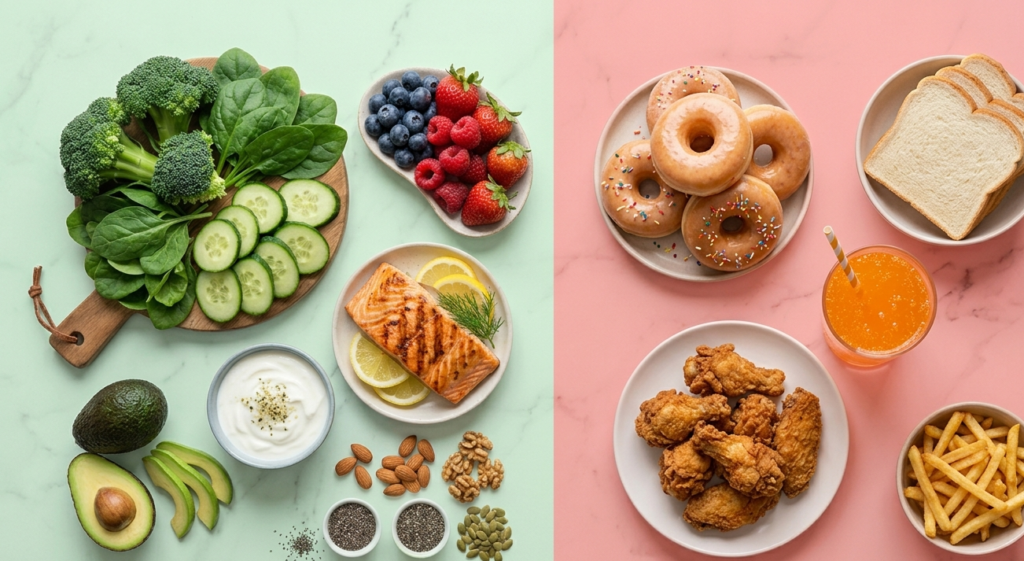
- Refined sugars and sweets : pastries, cakes, candy, soda
- White bread, white rice, processed cereals
- Trans fats and processed vegetable oils
- Alcohol : can worsen liver detoxification of estrogen
- Excess caffeine : can spike cortisol and worsen hormonal imbalance
- Highly processed foods : packaged snacks, fast food, instant noodles
- Dairy (in some women : can raise IGF-1 and androgens; monitor your symptoms)
- Soy in excess : can mimic estrogen; small amounts are usually fine
Note: Dairy affects every woman with PCOS differently. Some manage it well; others see reduced acne and lighter periods when they eliminate it. Track your response for 4–6 weeks before making a permanent decision.Difference Between PCOS and PCOD: What Every Woman Needs to Know
7-Day PCOS Diet Chart: A Practical Weekly Meal Plan
Below is a ready-to-use 7-day PCOS diet chart. This plan is designed to be balanced, satisfying, and realistic no extreme restriction, just smart, hormone-friendly eating.
| Day | Breakfast | Lunch | Dinner | Snack |
| Monday | Oatmeal + berries + 2 boiled eggs | Grilled chicken + quinoa salad + cucumber | Baked salmon + roasted broccoli + brown rice | Almonds + green tea |
| Tuesday | Greek yogurt + flaxseeds + kiwi | Lentil soup + whole grain bread + spinach salad | Stir-fried tofu + bell peppers + cauliflower rice | Pomegranate seeds + walnuts |
| Wednesday | Scrambled eggs + avocado + rye toast | Chickpea curry (light) + millet + raita | Grilled mackerel + sautéed kale + sweet potato | Apple slices + almond butter |
| Thursday | Smoothie: spinach + banana + chia + almond milk | Brown rice + dal + mixed vegetable sabzi | Chicken stir-fry + zucchini noodles + olive oil | Pumpkin seeds + herbal tea |
| Friday | Moong dal chilla + coriander chutney + boiled egg | Quinoa bowl + black beans + guacamole + salsa | Baked cod + roasted Brussels sprouts + lemon | Carrot sticks + hummus |
| Saturday | Besan (gram flour) cheela + tomato + onion filling | Grilled chicken wrap + whole wheat roti + salad | Vegetable soup + lentils + multigrain bread | Strawberries + dark chocolate (70%+) |
| Sunday | Overnight chia pudding + mixed berries + nuts | Palak paneer (homemade) + small brown rice portion | Baked salmon + asparagus + olive oil + garlic | Roasted chickpeas + tulsi tea |
Pro Tip: Drink 2–3 litres of water daily. Herbal teas like spearmint tea have shown natural anti-androgen effects in small studies consider adding one cup daily.
Meal Timing Tips for Your PCOS Diet Chart
What you eat matters , but so does when you eat. Here are meal timing strategies specifically helpful for PCOS:
Eat within 1 hour of waking: Starting the day with protein and healthy fat prevents an early morning cortisol and insulin spike. Skip the sweet breakfast cereals.
Don’t skip meals: Skipping meals worsens blood sugar swings and increases cortisol. Three balanced meals with 1–2 light snacks works well for most women with PCOS.
Eat dinner at least 2–3 hours before bed: Late eating spikes insulin when your body should be resting. Try to finish dinner by 7–8 PM.
Consider time-restricted eating: Some women with PCOS benefit from a 12:12 or 14:10 eating window. Speak to a dietitian before trying 16:8 fasting prolonged fasting can sometimes worsen cortisol in women.
Supplements That Complement Your PCOS Diet Chart
While food should always come first, certain supplements are well-researched for PCOS management. Always consult a doctor before starting any supplement.https://www.ncbi.nlm.nih.gov/pmc/articles/PMC6734597/
- Inositol (Myo-inositol + D-chiro-inositol 40:1 ratio) : improves insulin sensitivity and ovulation
- Magnesium : reduces insulin resistance, improves sleep and mood
- Vitamin D : deficiency is common in PCOS and linked to worse symptoms
- Omega-3 fish oil : reduces inflammation and androgen levels
- NAC (N-acetylcysteine) : antioxidant with insulin-sensitizing properties
- Zinc : helps with acne, hair loss, and androgen regulation
- Spearmint capsules : natural anti-androgen, reduces facial hair growth
Lifestyle Factors That Make Your PCOS Diet Chart Work Better
Diet is just one piece. These lifestyle habits multiply the effects of your PCOS diet chart significantly:
Exercise Regularly — But Don’t Overdo It
Strength training 3 times per week plus 150 minutes of moderate cardio per week is ideal. Over-exercising raises cortisol and can worsen hormonal disruption. Yoga and walking are both excellent, gentle options.
Prioritize Sleep
Poor sleep worsens insulin resistance, raises cortisol, and drives cravings for high-sugar foods. Aim for 7–9 hours consistently. Keep a regular sleep schedule even on weekends.
Manage Stress Actively
Chronic stress raises cortisol, which directly increases androgen production. Meditation, journaling, breathwork, and time in nature are all valid strategies pick what actually works for your personality.
Reduce Exposure to Endocrine Disruptors
Plastics (especially BPA), synthetic fragrances, and certain pesticides mimic hormones in the body. Switch to glass or stainless steel water bottles, choose organic produce where budget allows, and use clean beauty products.
Frequently Asked Questions About the PCOS Diet Chart
Q: What is the best PCOS diet chart for weight loss?
A: The best PCOS diet chart for weight loss focuses on low glycemic index carbohydrates, high fiber vegetables, lean proteins, and healthy fats. It avoids refined sugars and processed foods. Even a 5–10% reduction in body weight can significantly improve PCOS symptoms like irregular periods and high androgens.
Q: Can I eat rice on a PCOS diet chart?
A: Yes, but choose wisely. White rice has a high glycemic index and should be limited. Brown rice, black rice, or millets are much better alternatives. If you do eat white rice, pair it with lots of vegetables and protein to slow the glucose response.
Q: Is dairy bad for PCOS?
A: Dairy can worsen symptoms in some women with PCOS because it may raise IGF-1 (insulin-like growth factor) and androgen levels. However, it doesn’t affect all women equally. Greek yogurt is often tolerated well. Try eliminating dairy for 4–6 weeks and observe how your skin, periods, and energy levels respond.
Q: How long does it take for a PCOS diet chart to show results?
A: Most women notice changes in energy levels and bloating within 2–3 weeks. Hormonal improvements and menstrual regularity typically take 3–6 months of consistent dietary changes. Patience and consistency are key — PCOS is a complex hormonal condition that responds gradually.
Q: Is intermittent fasting good for PCOS?
A: Short eating windows like 12:12 can be beneficial for blood sugar control in PCOS. However, longer fasting protocols like 16:8 may increase cortisol in some women, which can worsen hormonal imbalance. It’s best to consult a registered dietitian who specializes in PCOS before starting any fasting regimen.
Q: Can a PCOS diet chart improve fertility?
A: Yes. Reducing insulin resistance through diet helps regulate ovulation. Studies show that lifestyle changes including a healthy diet can restore ovulatory cycles in many women with PCOS. While diet alone isn’t always sufficient for fertility, it significantly supports the effectiveness of fertility treatments if needed.
Q: What Indian foods are good for a PCOS diet chart?
A: Indian cuisine has many PCOS-friendly options: moong dal, palak (spinach) dishes, ragi (finger millet), methi (fenugreek) leaves, turmeric (anti-inflammatory), besan cheela, rajma, and chole (in moderation). Ghee in small amounts is also acceptable as it contains butyrate which supports gut health.
References & High-Authority Sources
This PCOS diet chart guide is informed by the following trusted medical and scientific sources:
1. World Health Organization (WHO). (2023). Polycystic ovary syndrome (PCOS). Retrieved from: https://www.who.int/news-room/fact-sheets/detail/polycystic-ovary-syndrome
2. Teede, H.J., et al. (2023). Recommendations from the 2023 international evidence-based guideline for the assessment and management of polycystic ovary syndrome. Human Reproduction, 38(1), 1–9. https://doi.org/10.1093/humrep/dead156
3. Barrea, L., et al. (2021). Dietary patterns and insulin resistance in PCOS. Nutrients, 13(4), 1203. https://doi.org/10.3390/nu13041203
4. Shang, Y., et al. (2021). Effect of myo-inositol and D-chiro-inositol on insulin resistance in PCOS: A systematic review. Frontiers in Endocrinology, 12, 641508.
5. Grant, P. (2010). Spearmint herbal tea has significant anti-androgen effects in polycystic ovarian syndrome. Phytotherapy Research, 24(2), 186–188.
6. National Institutes of Health (NIH). Office of Dietary Supplements : Magnesium Fact Sheet. https://ods.od.nih.gov/factsheets/Magnesium-HealthProfessional/
7. Harvard T.H. Chan School of Public Health : The Nutrition Source: Fiber. https://www.hsph.harvard.edu/nutritionsource/carbohydrates/fiber/
8. Mayo Clinic. (2024). Polycystic ovary syndrome (PCOS) : Symptoms and causes. https://www.mayoclinic.org/diseases-conditions/pcos/symptoms-causes/syc-20353439
Final Thoughts: Your PCOS Diet Chart Is a Long Game
Managing PCOS through diet is not about perfection — it is about consistency. Start with small, sustainable changes. Swap white bread for whole grain. Add one serving of leafy greens to your lunch. Replace your afternoon biscuit with a handful of nuts.
Over time, these small shifts compound into major hormonal changes. A well-structured PCOS diet chart does not just affect what’s on your plate — it changes how your body produces hormones, manages insulin, and supports your reproductive health.
And remember: you are not alone in this. Work with a healthcare team that includes your gynecologist and ideally a registered dietitian who understands PCOS. Use this guide as your foundation, not your ceiling.
You deserve to feel well. And with the right PCOS diet chart, that’s absolutely achievable one meal at a time.
⚠ Medical Disclaimer: This blog post is for informational and educational purposes only. It is not intended as medical advice and should not replace consultation with a qualified healthcare provider or registered dietitian. Always speak with your doctor before making significant dietary changes, especially if you have PCOS or any other health condition.
📌 Found this guide helpful? Share it with someone managing PCOS. Sharing evidence-based information can make a real difference.