PCOD food list to avoid this is one of the most searched topics by women diagnosed with Polycystic Ovarian Disease, and for good reason. What you eat every single day has a direct, measurable impact on your hormones, insulin levels, and the severity of PCOD symptoms.
PCOD (Polycystic Ovarian Disease) affects approximately 1 in 5 women in India and is now one of the leading hormonal disorders worldwide. Unlike a simple medical label, PCOD is deeply connected to lifestyle and food sits right at the heart of it.
In this guide, you will find a practical, evidence-backed PCOD food list to avoid, explained in plain language. No jargon. No fluff. Just real, actionable information that can help you take control of your condition starting today.
What Is PCOD and Why Does Diet Matter So Much?
PCOD stands for Polycystic Ovarian Disease. It is a condition where the ovaries produce multiple immature or partially mature eggs that turn into cysts. This leads to hormonal imbalance, irregular periods, weight gain, acne, and in some cases, difficulty conceiving.
One of the root drivers of PCOD is insulin resistance. When your body does not respond well to insulin, it overproduces it. This excess insulin then triggers the ovaries to produce more androgens (male hormones like testosterone), which worsens PCOD symptoms.
This is exactly why knowing the PCOD food list to avoid is so critical. Certain foods spike your blood sugar, increase inflammation, and throw your hormones further out of balance making your symptoms significantly worse.
The Core PCOD Food List to Avoid (Backed by Science)
Let us get straight into the detailed PCOD food list to avoid. These are foods that negatively affect insulin sensitivity, hormonal balance, and inflammation three factors that are central to managing PCOD effectively.What Is PCOD Problem in Females?
1. Refined Carbohydrates and White Flour Products
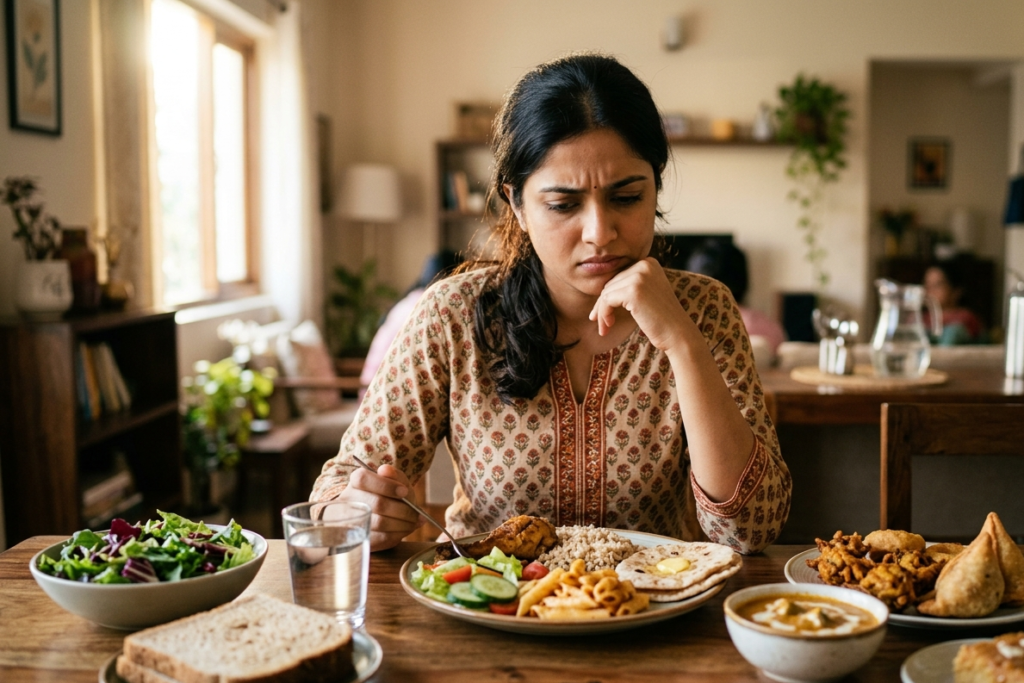
White bread, maida rotis, pasta made from refined flour, white rice, and biscuits are classic examples. These foods have a high glycemic index, meaning they rapidly convert into glucose and cause sharp spikes in blood sugar.
For women with PCOD, this constant blood sugar roller coaster worsens insulin resistance, promotes weight gain around the abdomen, and directly increases androgen production.
- White bread and buns
- Maida-based rotis, naan, and parathas
- White rice (in large portions)
- Commercial biscuits and crackers
2. Sugary Foods and Drinks
Sugar is arguably the most harmful item on any PCOD food list to avoid. This includes obvious culprits like sweets, chocolates, and desserts but also hidden sugars in packaged juices, flavoured yogurts, energy drinks, and even many so-called ‘healthy’ granola bars.
High sugar intake rapidly elevates insulin, promotes fat storage, and feeds systemic inflammation. Research published in the Journal of Clinical Endocrinology and Metabolism found that women with PCOD who reduced sugar intake saw meaningful improvements in menstrual regularity within 3 months.
- Mithai, ladoos, barfis, and halwa
- Soft drinks and cola beverages
- Packaged fruit juices (even 100% varieties)
- Flavoured milkshakes and sweetened teas
- Ice creams and frozen desserts
3. Processed and Junk Foods
Chips, namkeen, instant noodles, fast food burgers, and fried snacks are loaded with refined carbohydrates, trans fats, and artificial additives. These not only spike insulin but also disrupt gut health, which plays a significant role in hormonal regulation.
Trans fats found in hydrogenated vegetable oils (vanaspati) are especially dangerous for women with PCOD. They increase LDL cholesterol, reduce HDL, and worsen insulin sensitivity significantly.
- Potato chips and corn snacks
- Instant noodles and ready-to-eat meals
- Pizza, burgers, and deep-fried fast food
- Packaged namkeen and mixtures
4. Dairy Products — Approach with Caution
This one surprises many women. Full-fat dairy products, especially conventional milk, contain naturally occurring hormones and insulin-like growth factor 1 (IGF-1). In women with PCOD, these can amplify androgen production and worsen acne and hair-related symptoms.https://www.ncbi.nlm.nih.gov/pmc/articles/PMC4393027/
Not all dairy is equal, and the evidence is mixed. However, it is prudent to limit full-fat milk, paneer in excess, and flavoured dairy products as part of your PCOD food list to avoid.
- Full-fat cow’s milk (limit to 1 cup/day)
- Flavoured yogurts and sweetened curd
- Cheese consumed in excess
- Ice cream and cream-based desserts
5. Red Meat and Processed Meats
Excessive consumption of red meat (mutton, beef, pork) has been associated with increased inflammation and worse insulin sensitivity. Processed meats like sausages, hot dogs, and salami contain nitrates, preservatives, and excess sodium all of which are problematic for PCOD.https://www.healthline.com/nutrition/13-anti-inflammatory-foods
A diet high in red and processed meats also tends to be lower in fibre and fibre is your best friend when managing PCOD, as it slows digestion and prevents blood sugar spikes.
- Mutton and beef consumed in large quantities
- Sausages, salami, and hot dogs
- Canned meat products
6. Inflammatory Oils and Unhealthy Fats
Cooking oils high in omega-6 fatty acids like refined sunflower oil, soya oil, and especially vanaspati (hydrogenated vegetable fat) promote systemic inflammation. Inflammation is a key driver of PCOD severity, worsening hormonal imbalance and making weight management harder.
- Vanaspati and hydrogenated fats
- Excessive refined sunflower oil
- Margarine and butter substitutes
7. Alcohol and Caffeine in Excess
Alcohol disrupts liver function, and the liver plays a vital role in metabolising hormones. Excessive drinking can worsen estrogen dominance and interfere with insulin regulation both critical concerns in PCOD management.
Excessive caffeine (more than 2-3 cups of coffee daily) can elevate cortisol levels. High cortisol worsens adrenal androgen production and increases stress-related eating a double problem for women with PCOD.
Hidden Offenders in the PCOD Food List to Avoid
Many women focus only on the obvious culprits. But there is a group of hidden foods that quietly sabotage your PCOD management efforts. These are the ones not commonly discussed:
Soy Products in Large Quantities
Soy contains phytoestrogens plant compounds that mimic estrogen in the body. While moderate soy consumption may be fine for many, women with estrogen dominance (common in PCOD) should limit soy milk, soy chunks, tofu, and edamame.
Artificial Sweeteners
Diet sodas and sugar-free products often replace sugar with artificial sweeteners like aspartame and sucralose. Research suggests these can alter gut microbiome composition and paradoxically worsen insulin resistance over time making them a deceptive addition to the PCOD food list to avoid.
Packaged Health Foods
Many granola bars, flavoured oats, protein bars, and ‘multigrain’ biscuits marketed as healthy are still loaded with sugar, refined flour, and preservatives. Always read labels carefully.
What to Eat Instead: Smart Swaps for PCOD
Knowing the PCOD food list to avoid is only half the battle. The other half is knowing what to replace these foods with. Here are some smart, PCOD-friendly alternatives:
- Replace white rice with brown rice, millets (jowar, bajra, ragi), or quinoa
- Swap refined flour rotis with whole wheat, besan, or ragi rotis
- Replace sugar with small amounts of jaggery (in moderation), dates, or fruit
- Switch to cold-pressed coconut oil, mustard oil, or ghee for cooking
- Choose lean protein: eggs, chicken breast, fish, dals, and legumes
- Increase fibre through vegetables, seeds (flaxseeds, chia seeds), and whole fruits
Lifestyle Tips to Complement Your PCOD Food List to Avoid
Dietary changes work best when paired with consistent lifestyle habits. Here are evidence-based additions to your PCOD management plan:Difference Between PCOS and PCOD: What Every Woman Needs to Know
- Exercise at least 30 minutes daily — even walking reduces insulin resistance significantly
- Manage stress through yoga, pranayama, or mindfulness — cortisol directly impacts PCOD
- Sleep 7–8 hours consistently — poor sleep dysregulates hunger hormones and worsens insulin resistance
- Stay well hydrated with water, herbal teas, and coconut water
- Consult a registered dietitian for a personalised PCOD meal plan
Frequently Asked Questions (FAQs)
Q1. Is rice completely off-limits in the PCOD food list to avoid?
Not entirely. White rice in large amounts is on the PCOD food list to avoid because of its high glycemic index. However, small portions of white rice with plenty of vegetables and protein can be managed. Brown rice, millets, and quinoa are far better alternatives as they release energy slowly and support blood sugar stability.
Q2. Can I eat fruits if I have PCOD?
Yes, but choose wisely. Whole fruits with fibre (apple, pear, berries, guava) are generally fine. Avoid fruit juices, overripe bananas, and very sweet fruits like mangoes and chikoo in large quantities, as these spike blood sugar rapidly.
Q3. Is dairy completely banned on a PCOD diet?
Not completely. Plain, unsweetened curd (dahi) is actually beneficial for gut health and is not on the strict PCOD food list to avoid. What you should limit is full-fat conventional milk, flavoured dairy products, and excessive cheese. Plant-based alternatives like almond milk or oat milk can be good options.
Q4. How long does it take to see results after following a PCOD diet?
Most women begin noticing improvements within 4–8 weeks of strictly following the PCOD food list to avoid and adopting a balanced diet. Improvements may include more regular periods, reduced bloating, clearer skin, and better energy levels. Full hormonal rebalancing can take 3–6 months of consistent effort.
Q5. Can I have coffee with PCOD?
1–2 cups of unsweetened black coffee or green tea daily is generally acceptable. The problem arises with sweetened coffee beverages, excessive caffeine, or creamers that add sugar and saturated fat. Herbal teas like spearmint tea have actually shown some anti-androgen benefits for PCOD in preliminary research.
Q6. Is jaggery better than sugar for PCOD?
Jaggery has a slightly lower glycemic index than refined white sugar and contains trace minerals. However, it is still a form of sugar and can spike blood glucose. Use it very sparingly as part of your PCOD management it is the lesser evil, not a free pass.
References
1. Barrea, L., et al. (2019). Nutrition, insulin resistance and dysfunctional adipose tissue determine the risk to develop type 2 diabetes. Journal of Translational Medicine.
2. Moran, L.J., et al. (2013). Dietary composition in the treatment of polycystic ovary syndrome. Human Reproduction Update, 19(5), 432–450.
3. Marsh, K.A., et al. (2010). Effect of a low glycemic index compared with a conventional healthy diet on polycystic ovary syndrome. American Journal of Clinical Nutrition.
4. Hoeger, K.M., et al. (2008). Impact of metformin with or without caloric restriction on cardiometabolic risk factors in obese women with PCOS. Fertility and Sterility.
5. National Institute for Health and Care Excellence (NICE). Polycystic Ovary Syndrome: Evidence Review (2023). nice.org.uk
6. Grant, P. (2010). Spearmint herbal tea has significant anti-androgen effects in polycystic ovarian syndrome. Phytotherapy Research.
DISCLAIMER
The information provided in this blog post is intended for general educational and informational purposes only. It is not a substitute for professional medical advice, diagnosis, or treatment. PCOD is a complex hormonal condition that affects every individual differently.
Please consult a qualified medical doctor, gynaecologist, or registered clinical dietitian before making significant changes to your diet or lifestyle, especially if you have been diagnosed with PCOD or any related health condition. The author and publisher of this content accept no liability for any health outcomes resulting from the use or misuse of the information presented herein.