
Protein powder for weight loss is one of the most searched supplements on the internet right now and for good reason. Millions of people are trying to shed body fat, preserve lean muscle, and keep hunger in check, all at the same time. It sounds like a tall order, but research shows that the right protein powder, used correctly, can make that journey a lot more manageable.
But here is the thing: not every tub of powder at the supplement store is going to move the needle for you. The type of protein matters. The timing matters. The ingredients hidden in that label matter a lot more than most people realise.
In this guide, we are going to break it all down simply, honestly, and without the marketing fluff. By the end, you will know exactly what to look for, what to avoid, and how to use protein powder as a real tool in your weight loss strategy.
Does Protein Powder Actually Help With Weight Loss?
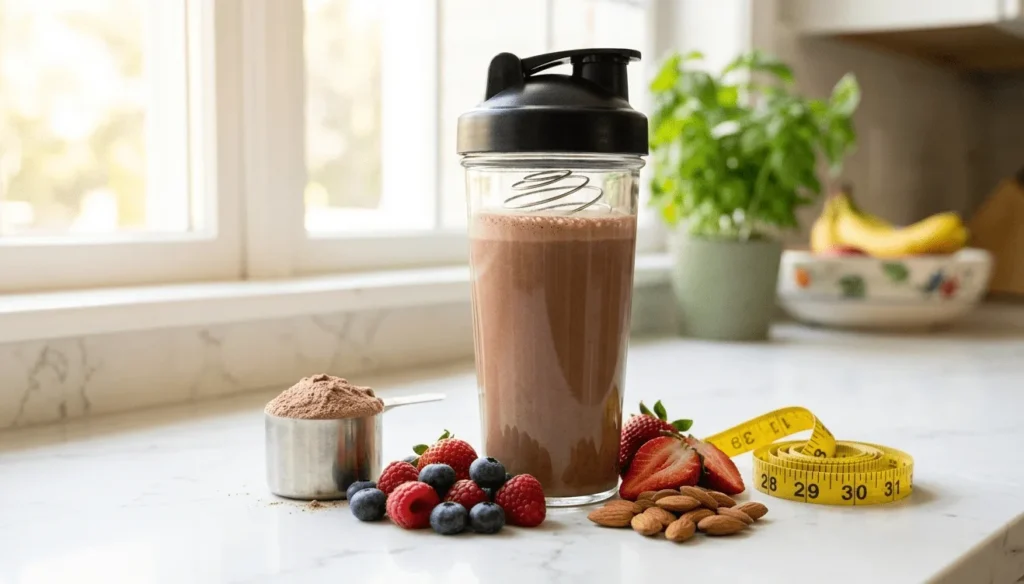
Yes but let’s be precise about how. Protein powder for weight loss works primarily through four well-documented mechanisms:
- Increased satiety: Protein is the most filling macronutrient. A high-protein meal keeps you full longer, which naturally reduces your total calorie intake.
- Thermic effect of food (TEF): Your body burns about 20–30% of protein calories just digesting it, compared to only 5–10% for carbs and 0–3% for fats.
- Muscle preservation: During a calorie deficit, adequate protein intake helps you hold on to lean muscle, so most of the weight you lose is actually fat.
- Reduced cravings: Studies show high-protein diets lower ghrelin (the hunger hormone) and boost appetite-regulating hormones like GLP-1 and PYY.
A 2020 meta-analysis published in the Journal of the Academy of Nutrition and Dietetics confirmed that protein supplementation significantly improved body composition when combined with resistance training and a controlled diet (Moon & Koh, 2020).
Best Types of Protein Powder for Weight Loss
Walk into any supplement shop and you will see dozens of options. Here is a straight-talking breakdown of the most common types and how they stack up for fat loss.
1. Whey Protein Isolate — Best Overall for Weight Loss
Whey protein isolate is the gold standard when using protein powder for weight loss. It is rapidly absorbed, high in leucine (which triggers muscle protein synthesis), and contains minimal fat and carbohydrates. With roughly 90–95% protein content per serving, it delivers maximum protein with minimum extra calories.What Is Whey Protein Isolate? The Complete Guide You Actually Need
Best for: People who are not lactose intolerant and want fast post-workout recovery with a lean macronutrient profile.
2. Casein Protein — Best for Overnight Hunger Control
Casein digests slowly it can take up to 7 hours to fully absorb. This makes it exceptional for curbing late-night hunger and preventing muscle breakdown during sleep. If you find yourself raiding the fridge at midnight, a casein shake before bed is a smart, low-calorie move.
Best for: People who struggle with evening cravings or go long overnight fasts.
3. Plant-Based Protein Powder — Best for Vegans and Gut Sensitivity
Pea protein, brown rice protein, and blended plant proteins have come a long way. A well-formulated blend (like pea + rice) delivers a complete amino acid profile comparable to whey. Bonus: plant proteins often contain more fibre, which further supports satiety during a calorie deficit.
Best for: Vegans, vegetarians, and anyone with dairy allergies or digestive issues from whey.
4. Collagen Protein — Worth It, With Caveats
Collagen has become trendy, but it is not a complete protein it lacks tryptophan. It is not ideal as your primary protein powder for weight loss, but it can complement a balanced diet and supports joint and skin health, which matters when you are training hard.What Is Whey Protein? The Complete Guide You Actually Need to Read
How Much Protein Do You Actually Need for Weight Loss?
This is where a lot of generic fitness advice falls short. The right amount of protein depends on your body weight, activity level, and how aggressive your calorie deficit is.
- Sedentary to lightly active: 1.2–1.6 g per kg of body weight per day
- Moderately active (3–4 workouts/week): 1.6–2.0 g per kg
- Highly active or in a significant deficit: Up to 2.2–2.4 g per kg to protect muscle mass
For a 70 kg person trying to lose fat, that translates to roughly 112–168 g of protein per day. If your diet alone does not get you there, a quality protein powder for weight loss fills the gap quickly and cheaply.
When Is the Best Time to Take Protein Powder for Weight Loss?
Timing plays a supporting role not the starring one. Total daily protein intake matters far more than precise timing. That said, strategic timing can enhance your results:
Post-Workout (Within 2 Hours)
This is the classic window. After resistance training, muscle protein synthesis is elevated, and a fast-absorbing protein like whey isolate is absorbed efficiently. It supports recovery and maintains the muscle mass that keeps your metabolism running high.
As a Meal Replacement or Snack
Replacing a high-calorie, low-nutrient snack with a protein shake is one of the easiest calorie-reduction strategies available. A shake with 25 g of protein keeps you full for 2–3 hours and typically costs only 120–150 calories.
Before Bed (Casein)
Research from Maastricht University found that consuming 40 g of casein protein before sleep increased muscle protein synthesis overnight without negatively affecting fat loss (Res et al., 2012). This is a legitimate strategy, not a myth.
What to Look for on the Label When Choosing Protein Powder for Weight Loss
The supplement industry is not tightly regulated in most countries, which means label reading is a non-negotiable skill. Here is what to prioritise:
- Protein per serving: Aim for at least 20–25 g per scoop from the protein source itself, not ‘protein blend’ fillers.
- Added sugars: Anything over 5 g per serving starts to undermine a calorie-controlled diet. Watch for maltodextrin, glucose syrup, and ‘evaporated cane juice’ disguised as natural sweeteners.
- Ingredient list length: Shorter is usually better. If you cannot pronounce half the list, that is a flag.
- Third-party testing: Look for NSF Certified for Sport, Informed Sport, or Labdoor certification. These verify that the label accurately reflects what is in the product.
- Calories per serving: For weight loss, keep shakes under 200 calories unless you are using them as full meal replacements.https://www.ncbi.nlm.nih.gov/pmc/
Common Mistakes People Make With Protein Powder for Weight Loss
Even with a quality product, these mistakes can stall your progress or make it worse.
Drinking Shakes On Top of a Full Diet
Protein powder is not a magic extra it is a tool to help you hit your protein targets within your calorie budget. Adding shakes on top of an already sufficient diet creates a calorie surplus, not a deficit.
Choosing Meal Replacement Shakes Instead of Protein Shakes
Meal replacement shakes are formulated differently many contain high carbohydrates, vitamins, and calories to substitute entire meals. Unless you are specifically replacing a meal, a standard protein powder for weight loss is the leaner option.
Ignoring Whole Food Protein Sources
Supplements exist to supplement, not replace. Chicken, eggs, lentils, Greek yoghurt, and fish are all superior protein sources in terms of nutrient density and satiety. Use protein powder to bridge the gap, not as your foundation.https://www.mayoclinic.org
References
Moon, J., & Koh, G. (2020). Clinical evidence and mechanisms of high-protein diet-induced weight loss. Journal of Obesity & Metabolic Syndrome, 29(3), 166–173. https://doi.org/10.7340/jomes20028
Res, P. T., Groen, B., Pennings, B., Beelen, M., Wallis, G. A., Gijsen, A. P., Senden, J. M. G., & Van Loon, L. J. C. (2012). Protein ingestion before sleep improves postexercise overnight recovery. Medicine & Science in Sports & Exercise, 44(8), 1560–1569.
Westerterp-Plantenga, M. S., Lemmens, S. G., & Westerterp, K. R. (2012). Dietary protein – its role in satiety, energetics, weight loss and health. British Journal of Nutrition, 108(S2), S105–S112.
Stokes, T., Hector, A. J., Morton, R. W., McGlory, C., & Phillips, S. M. (2018). Recent perspectives regarding the role of dietary protein for the promotion of muscle hypertrophy with resistance exercise training. Nutrients, 10(2), 180.
Churchward-Venne, T. A., Murphy, C. H., Longland, T. M., & Phillips, S. M. (2013). Role of protein and amino acids in promoting lean mass accretion with resistance exercise and attenuating lean mass loss during energy deficit in humans. Amino Acids, 45(2), 231–240.
Frequently Asked Questions (FAQ) — Rank Math FAQ Block
Q1: Is protein powder good for weight loss?
Yes, protein powder can be an effective tool for weight loss when used correctly. It helps increase satiety, preserve lean muscle during a calorie deficit, and boost your metabolic rate through the thermic effect of protein digestion. However, it is not a magic solution it works best alongside a balanced diet and regular exercise.
Q2: Which protein powder is best for weight loss?
Whey protein isolate is generally considered the best protein powder for weight loss due to its high protein content (90–95%), low calorie profile, and fast absorption. For vegans or those with dairy sensitivities, a pea-rice blend is an excellent alternative. Casein is best for nighttime use to control overnight hunger.
Q3: When should I drink protein shakes to lose weight?
The most effective times are: (1) after a workout to support muscle recovery and fat loss; (2) as a high-protein, low-calorie snack to reduce overall calorie intake; and (3) before bed using casein protein to prevent muscle breakdown overnight. Consistency with total daily protein intake matters more than the exact timing.
Q4: How much protein powder should I take daily for weight loss?
Most people aiming for fat loss should target 1.6–2.2 g of protein per kilogram of body weight per day. Protein powder should only make up the portion your whole food diet does not cover. Typically, one to two scoops per day (25–50 g of protein from powder) is sufficient for most individuals.
Q5: Can protein powder replace meals for weight loss?
A standard protein shake is not designed as a complete meal replacement it lacks the full spectrum of vitamins, minerals, and fibre your body needs. You can use a protein shake as a low-calorie snack, but replacing multiple meals long-term is not sustainable or nutritionally complete. Use whole foods as your primary diet foundation.
Q6: Does protein powder cause weight gain?
Protein powder itself does not cause weight gain. Like any food, excess calories from any source can lead to fat gain. If you add protein shakes on top of an already sufficient diet without reducing calories elsewhere, you will be in a calorie surplus. Used strategically within your calorie target, protein powder supports weight loss, not gain.
Q7: Is plant-based protein powder effective for weight loss?
Absolutely. Plant-based protein powders particularly pea-rice blends have been shown to be equally effective as whey for muscle preservation and weight loss outcomes. They also tend to be higher in fibre, which adds to satiety. The key is ensuring you get a complete amino acid profile by choosing a blend rather than a single-source plant protein.
Q8: Are there any side effects of using protein powder for weight loss?
For most healthy adults, high-quality protein powder is safe. Some people experience digestive discomfort bloating, gas, or cramps especially with whey concentrate (which contains more lactose). Switching to whey isolate or a plant-based option usually resolves this. Extremely high protein intakes over long periods may stress the kidneys in individuals with pre-existing kidney conditions always consult your doctor if you have health concerns.
Disclaimer
The information provided in this article is intended for general educational and informational purposes only. It does not constitute medical advice, diagnosis, or treatment. The content regarding protein powder for weight loss is based on publicly available research and general nutritional guidelines at the time of writing.
Individual results from using protein supplements may vary based on personal health conditions, diet, activity levels, and other factors. Always consult a qualified healthcare professional, registered dietitian, or licensed nutritionist before starting any new supplementation programme, particularly if you have pre-existing medical conditions, are pregnant or breastfeeding, or are taking prescription medications.
The mention of any specific brand, product, or supplement in this article does not constitute an endorsement or recommendation. The author and publisher are not responsible for any adverse effects or consequences resulting from the use of suggestions, products, or procedures described in this content.