Iron rich foods for women aren’t just another wellness buzzword. For a lot of women, the right foods can be the actual difference between dragging yourself through the afternoon and having real energy left over for the things you love. If you’ve been feeling foggy, short of breath on the stairs, or cold all the time no matter the season, your body may simply be asking for more iron on your plate.
Quick answer: Women need roughly 18 milligrams of iron daily (27 mg during pregnancy), and the best sources are red meat, poultry, shellfish, lentils, beans, spinach, tofu, pumpkin seeds, and fortified cereals ideally paired with vitamin C to help your body absorb more of it. Keep reading for the full breakdown, a sample day, and answers to the questions women ask most.
Why Iron Rich Foods for Women Matter More Than You Think
Iron is the mineral your red blood cells rely on to carry oxygen to every organ, muscle, and cell in your body. Without enough of it, your body can’t deliver oxygen efficiently, and that shows up as exhaustion, brain fog, and a heaviness that no amount of sleep seems to fix.
Women need more iron than men for a simple biological reason: monthly blood loss through menstruation. Pregnancy, breastfeeding, heavy periods, or a mostly plant-based diet can push that need even higher. According to global health data, women of reproductive age are among the groups most likely to develop iron deficiency, and it remains one of the most common nutrient gaps in the world, cutting across income levels and countries.
This is exactly why building a habit around this kind of eating isn’t a passing trend. It’s about giving your body the raw material it needs to function properly, day in and day out something a lot of women don’t think about until they’re already running on empty.https://ods.od.nih.gov/factsheets/Iron-Consumer/
Understanding Iron Deficiency and Anemia
Not everyone with low iron has full-blown anemia, but the two are closely linked. Iron deficiency happens when your body’s stores run low; anemia happens when that shortage becomes severe enough to affect your red blood cell count.
Doctors typically diagnose this with a simple blood panel that checks hemoglobin and ferritin (your iron storage protein). Mild deficiency is often manageable through diet alone, while diagnosed anemia may require supplementation under medical guidance. Either way, food is almost always part of the solution.https://www.mayoclinic.org/diseases-conditions/iron-deficiency-anemia/symptoms-causes/syc-20355034
Signs Your Body Might Need More Iron
Low iron doesn’t always show up as a dramatic symptom. Often it’s subtle, and it’s easy to blame on stress, poor sleep, or a busy season of life. Common warning signs include:
- Persistent tiredness, even after a full night’s sleep
- Pale skin or pale inner eyelids
- Shortness of breath during normal activity
- Cold hands and feet
- Brittle nails or noticeable hair thinning
- Headaches, dizziness, or trouble concentrating
- Unusual cravings for ice, chalk, or starchy foods, a condition doctors call pica
If several of these sound familiar, it’s worth asking your doctor for a blood test before making major changes. But adding more iron-rich options to your meals is a safe, sensible first step for almost everyone.
The Best Iron Rich Foods for Women, By Category
Not all iron is created equal. Food contains two types: heme iron, found in animal products, which your body absorbs easily, and non-heme iron, found in plants, which is absorbed less efficiently but still valuable. A smart plate combines both whenever possible.
Animal-Based Iron Rich Foods for Women
These options offer the most easily absorbed form of iron, making them some of the most efficient choices for anyone trying to raise their levels quickly.
- Red meat — beef and lamb are among the richest natural sources of heme iron
- Liver and organ meats — extremely concentrated in iron, plus vitamin A and B12
- Poultry — chicken and turkey, especially dark meat cuts
- Shellfish — oysters, mussels, and clams are surprisingly iron-dense
- Eggs — a moderate source, easy to add to almost any meal
Plant-Based Iron Rich Foods for Women
For vegetarians, vegans, or anyone simply eating less meat, these plant-based options can still add up to meaningful daily intake, especially when paired correctly (more on that below).
- Lentils and beans — chickpeas, kidney beans, and lentils are pantry staples packed with iron
- Spinach and dark leafy greens — kale, Swiss chard, and spinach all contribute non-heme iron
- Tofu and tempeh — soy-based proteins with a solid iron content
- Pumpkin seeds and cashews — an easy iron boost as a snack
- Quinoa — a whole grain offering both iron and complete protein
- Fortified cereals — many breakfast cereals are fortified specifically because iron gaps are so common
- Dark chocolate — yes, a genuine source of iron, in moderation
During Pregnancy and Breastfeeding
Iron needs roughly double during pregnancy because your body is building extra blood volume to support your growing baby. Doctors often recommend prioritizing iron intake alongside a prenatal supplement. Good choices include lean red meat, lentils, fortified oatmeal, dried apricots, and leafy greens, all paired with a source of vitamin C to help absorption. Breastfeeding mothers should keep this focus going, since needs stay elevated in the months after delivery.
Top Iron-Content Foods at a Glance
If you like to see numbers before you shop, here’s roughly how much iron a typical serving provides. These figures are approximate and can vary by brand and preparation method, but they’re a useful starting point for planning meals.
- Beef liver (3 oz, cooked): around 5 mg
- Lean beef (3 oz, cooked): around 2 to 3 mg
- Oysters (3 oz, cooked): around 8 mg
- Chicken thigh (3 oz, cooked): around 1 mg
- Lentils (1 cup, cooked): around 6.6 mg
- Spinach (1 cup, cooked): around 6.4 mg
- Tofu (½ cup, firm): around 3.4 mg
- Fortified breakfast cereal (1 cup): around 8 to 18 mg, depending on brand
- Pumpkin seeds (1 oz): around 2.5 mg
- Dark chocolate, 70 to 85 percent cacao (1 oz): around 3.4 mg
Keeping a rough sense of these numbers makes it easier to build a full day of meals that consistently adds up to your target, rather than guessing.
Iron Needs for Active Women and Athletes
Women who train hard, run long distances, or exercise at a high intensity regularly can lose extra iron through sweat, foot-strike impact during running, and minor gastrointestinal blood loss. Combined with menstrual losses, this puts active women at a noticeably higher risk of deficiency than the general population.
If you’re a competitive athlete or simply someone who trains most days of the week, it’s worth paying closer attention to your intake and asking a doctor about periodic blood work, especially if you notice performance dropping alongside classic fatigue symptoms.
How Long It Takes to See Results
One of the most common questions after switching to a more iron-focused way of eating is how quickly it actually helps. The honest answer is that it depends on how low your levels were to begin with.
For mild, diet-related dips, some women notice improved energy within two to three weeks of consistent eating. For a confirmed deficiency or anemia, it typically takes closer to two to three months of steady effort, sometimes combined with a supplement, before blood work shows real improvement. Iron stores rebuild slowly, so patience and consistency matter more than any single “iron-packed” meal.
A helpful way to track progress is to note your energy levels, sleep quality, and any symptoms like dizziness or breathlessness in a simple journal or notes app. Even jotting down two or three lines at the end of each day can reveal patterns you’d otherwise miss, like feeling noticeably better on days you ate a proper breakfast versus days you skipped it. If nothing improves after a month or two of genuinely consistent changes, that’s a good signal to loop your doctor back in rather than assuming diet alone will eventually catch up.
How to Absorb More From Iron Rich Foods for Women
Eating the right foods is only half the equation absorption matters just as much. Here’s how to get the most out of every plate.
Pair with vitamin C. Adding citrus, bell peppers, strawberries, or tomatoes to a meal significantly boosts how much non-heme iron your body actually absorbs from plant-based sources.
Watch your coffee and tea timing. Tannins in coffee and tea can block iron absorption by up to half if consumed too close to a meal. Try to leave an hour gap on either side.
Cook in cast iron. Cooking acidic foods like tomato sauce in a cast iron skillet can meaningfully increase the iron content of the meal itself.
Separate calcium and iron. Calcium-rich foods and supplements compete with iron for absorption, so it’s smart to space out dairy and iron-heavy meals when possible.
Combine heme and non-heme sources. Adding even a small amount of meat, poultry, or fish to a plant-based meal helps your body absorb more of the non-heme iron sitting alongside it — a trick nutritionists sometimes call the “meat factor.”
A Sample Day Built Around Iron-Rich Eating
Putting this into practice doesn’t need to be complicated. Here’s a simple example of what a full day might look like:
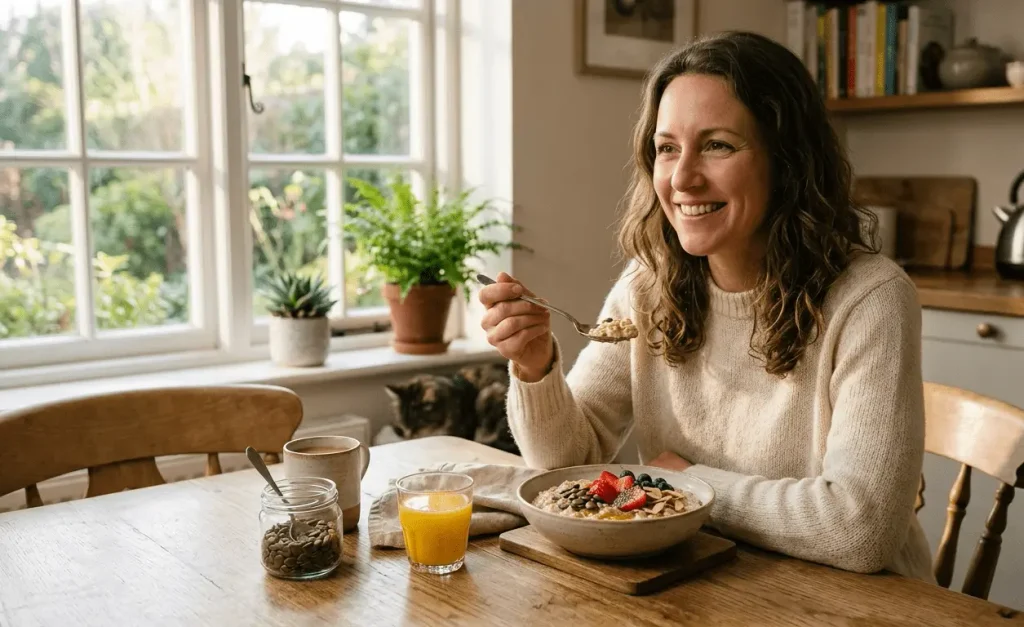
- Breakfast: Fortified oatmeal topped with pumpkin seeds and sliced strawberries
- Lunch: Lentil soup with a side salad of spinach, orange segments, and grilled chicken
- Snack: A small handful of cashews and a square of dark chocolate
- Dinner: Lean beef or tofu stir-fry with bell peppers, broccoli, and quinoa
- Drink timing: Tea or coffee enjoyed between meals, not with them
This kind of pattern naturally weaves iron-dense choices into every part of the day without requiring a total diet overhaul.
Two Simple Recipe Ideas to Try This Week
Lentil and spinach curry: Simmer red lentils with diced tomatoes, garlic, and warming spices, then stir in fresh spinach at the end. Serve with a squeeze of lemon for a vitamin C boost that helps absorption.
Beef and bell pepper stir-fry: Quickly sear thin strips of lean beef with sliced red and yellow peppers, garlic, and a splash of citrus-based sauce. It’s a fast, weeknight-friendly way to combine heme iron with vitamin C in one pan.
Mistakes That Quietly Sabotage Your Iron Intake
Even with good intentions, a few common habits undo the benefits of an otherwise solid diet. Watch out for these:
- Drinking coffee or tea directly with meals, which blunts absorption
- Relying only on plant sources without pairing them with vitamin C or a small amount of animal protein
- Taking calcium supplements at the same time as iron-rich meals
- Ignoring persistent symptoms instead of getting a simple blood test
- Assuming a daily multivitamin is enough, when a targeted approach to food, and supplementation if needed, tends to work better
Small adjustments in timing and pairing can make a bigger difference than adding an entirely new food to your plate. Most women see the biggest improvement simply by fixing one or two of these habits rather than overhauling their entire diet overnight, so pick the change that feels easiest to stick with first and build from there.
Frequently Asked Questions About Iron Rich Foods for Women
How much iron do women need daily?
Most adult women need around 18 milligrams of iron per day, which rises to roughly 27 milligrams during pregnancy. After menopause, needs typically drop closer to 8 milligrams per day, similar to adult men, since monthly blood loss is no longer a factor.
What are the fastest-absorbing iron-rich foods?
Animal-based sources like red meat, liver, and shellfish contain heme iron, which the body absorbs far more efficiently than the non-heme iron found in plants. If you eat meat, these are generally the quickest way to raise iron levels through diet alone.
Can women get enough iron on a vegetarian or vegan diet?
Yes, it’s possible, but it takes more intention. Vegetarians and vegans should lean on a wide variety of plant-based options lentils, tofu, fortified cereals, seeds and consistently pair them with vitamin C-rich foods to improve absorption.
Can women get enough iron on a vegetarian or vegan diet?
Yes, it’s possible, but it takes more intention. Vegetarians and vegans should lean on a wide variety of plant-based options lentils, tofu, fortified cereals, seeds and consistently pair them with vitamin C-rich foods to improve absorption.
What foods or habits block iron absorption?
Tannins in coffee and tea, calcium from dairy or supplements, and certain compounds in whole grains, called phytates, can all reduce how much iron your body absorbs from a meal. Spacing these out from your main iron sources helps.
When should a woman consider iron supplements instead of just food?
If a blood test confirms iron deficiency or anemia, food alone often isn’t enough to correct it quickly, and a doctor may recommend a supplement. Diet is excellent for maintenance and prevention, but a diagnosed deficiency usually needs a more targeted medical approach.
Are iron needs different during pregnancy or heavy periods?
Yes. Pregnancy roughly doubles iron requirements, and women with heavy menstrual periods lose more iron monthly than average, which raises their daily needs. Both groups benefit from prioritizing iron-dense meals at nearly every sitting, alongside guidance from a healthcare provider.
Can you take in too much iron?
It’s possible, especially through high-dose supplements rather than food. Excess iron can build up in the body and cause its own health problems, so supplementation should generally be guided by a blood test and a doctor’s recommendation rather than guesswork.
Final Thoughts on Iron Rich Foods for Women
Building a healthy eating pattern around iron doesn’t require perfection it requires consistency. A few smart swaps, better pairing habits, and awareness of your own symptoms can go a long way toward keeping your energy, focus, and overall health where they should be. Start with one or two changes this week, and let the rest follow naturally.
Disclaimer: This article is for general informational purposes only and is not a substitute for professional medical advice, diagnosis, or treatment. Always consult a qualified healthcare provider before making significant changes to your diet or starting any supplement. This post may contain affiliate or sponsored links, and we may earn a commission at no additional cost to you if you make a purchase through them. All opinions expressed remain our own.