How to get regular periods naturally is one of the most searched health questions among women of all ages and for good reason. An irregular or delayed cycle can feel frustrating, confusing, and even alarming. The good news? Your body is remarkably responsive to the right lifestyle changes. This guide walks you through science-backed, natural approaches to bring your cycle back on track no prescriptions needed.
Why Your Period Goes Off Track
Before diving into solutions, it helps to understand what’s disrupting your cycle in the first place. Your menstrual cycle is controlled by a delicate hormonal orchestra even small disruptions can push everything off beat.
Common reasons periods become late, irregular, or absent include:
- Chronic stress and elevated cortisol levels
- Sudden weight gain or loss
- Over-exercising or under-eating
- Polycystic Ovarian Syndrome (PCOS)What Is PCOD Problem in Females?
- Thyroid imbalances
- Hormonal birth control (especially after stopping it)
- Nutritional deficiencies — particularly iron, Vitamin D, and Vitamin B12
Understanding your root cause shapes which natural approach will work best for you.
Important: If your period has been absent for more than 3 months or is consistently irregular, please consult a gynecologist to rule out underlying conditions like PCOS, thyroid disorders, or premature ovarian insufficiency.
How to Get Periods Early Naturally — When Your Cycle Is Running Late
If your period is latehttps://womenshealth.gov/menstrual-cycle and you’re looking to nudge it along naturally, there are several time-tested approaches. These work best when your body is otherwise healthy not as a substitute for medical care.
1. Heat Therapy
Applying a warm compress or hot water bag to your lower abdomen can help relax uterine muscles and promote blood flow to the pelvic area. Try this for 15–20 minutes, two to three times a day when your period is due.
Quick Tip: A warm bath with a few drops of ginger essential oil can combine the benefits of heat and herbal support in one calming session.
2. Ginger Tea
Ginger is one of the most studied natural emmenagogues substances that stimulate or increase menstrual flow. Boil a few slices of fresh ginger in water for 10 minutes, strain, and sip twice daily in the days leading up to your expected period.
3. Papaya
Unripe papaya contains carotene and papain, which can stimulate estrogen and thereby trigger uterine contractions. Eating raw papaya regularly in the week before your expected period is a popular traditional remedy across South and Southeast Asia and science supports some of its mechanism.
4. Physical Activity — Specifically Yoga
Certain yoga poses improve blood circulation to the pelvis and help regulate hormonal flow. Poses like Malasana (deep squat), Baddha Konasana (bound angle pose), and Setu Bandhasana (bridge pose) are particularly helpful when you want to know how to get periods early naturally.
Natural Ways to Get Periods — Foods and Herbs That Support Your Cycle
Your diet has a profound impact on hormonal health. Several foods act as natural cycle regulators not overnight, but consistently over weeks of use.
Foods That Support Menstruation Naturally
| Sesame Seeds | Rich in lignans that balance estrogen. Eat 1 tablespoon daily, raw or as tahini. |
| Parsley | Contains apiol, a natural emmenagogue. Parsley tea is a traditional remedy across many cultures. |
| Turmeric | Curcumin influences estrogen and progesterone. Add to warm milk or meals daily. |
| Dark Berries | Rich in antioxidants that support hormonal balance and reduce inflammation. |
| Flaxseeds | Phytoestrogens help modulate estrogen levels. Add to yogurt or smoothies. |
| Spearmint Tea | Shown in studies to lower androgens — particularly helpful for women with PCOS. |
Herbal Supports Worth Knowing
Ashwagandha
One of Ayurveda’s most celebrated adaptogens, ashwagandha helps lower cortisol a key stress hormone that disrupts the hypothalamic-pituitary-ovarian (HPO) axis. When stress is your root cause, this herb can genuinely help restore cycle regularity over 6–8 weeks of daily use.
Shatavari
Another Ayurvedic classic. Shatavari is a natural phytoestrogen and reproductive tonic widely used to regulate menstrual cycles. It nourishes the uterus and supports hormonal balance, especially during post-pill recovery.
Chasteberry (Vitex)
Vitex agnus-castus has solid clinical backing for irregular cycles. It works on the pituitary gland to balance prolactin and progesterone two hormones that play a critical role in cycle regularity. Give it at least 3 months of consistent use.
How to Get Periods Naturally Through Lifestyle Changes
No herb or food works in isolation. The most powerful natural period regulation comes from a combination of smart lifestyle shifts.
Manage Stress — Your Cycle’s Biggest Enemy
High cortisol quite literally tells your brain to suppress ovulation. Your body, under stress, deprioritizes reproduction. This is why missed periods are common during exams, job loss, grief, or life upheavals.
Daily practices that genuinely help:
- 10–20 minutes of meditation or pranayama breathing
- Journaling — even 5 minutes to offload mental clutter
- Reducing screen time in the hour before bed
- Spending time in nature, which measurably lowers cortisol
Fix Your Sleep
Melatonin your sleep hormone plays a direct role in regulating LH and FSH, the hormones that drive ovulation. Poor sleep disrupts this chain. Aim for 7–9 hours at a consistent time every night. Even one week of improved sleep can shift hormonal patterns.
Eat Enough — Especially Fat and Carbohydrates
Restrictive dieting is one of the top causes of hypothalamic amenorrhea when the brain shuts off the menstrual cycle due to caloric or nutritional insufficiency. Your body needs cholesterol to make estrogen. Healthy fats from avocado, eggs, nuts, and olive oil are non-negotiable for cycle health.https://www.healtline.com/nutrition/foods-to-eat-for-period-regulation
Nutritional Focus: If your diet has been restrictive, focus first on eating enough total calories and include at least 3–4 servings of healthy fats daily. This alone can restart a stalled cycle within weeks.
Maintain a Healthy Weight Range
Both underweight and overweight conditions disrupt hormonal balance. Fat tissue produces estrogen too little body fat and estrogen drops; too much and it creates estrogen dominance. A body fat percentage between 17–22% is generally optimal for regular cycles in most women.
How to Get Periods Fast Naturally at Home — Immediate Approaches
If you’re looking for natural ways to get periods fast naturally at homeHow to Get Periods Immediately If Delayed: Safe Home Remedies and Medical Tips, these are the most responsive options results typically seen within 3–7 days when the body is ready:
The Vitamin C Approach
High doses of Vitamin C are thought to raise estrogen levels and lower progesterone, which can trigger the uterine lining to shed. Foods rich in Vitamin C include citrus fruits, bell peppers, kiwi, and guava. Some women use supplemental Vitamin C (500–1000 mg/day) in the days before their expected period.
Use with caution: Very high doses of Vitamin C (above 2000 mg/day) can cause digestive upset. Do not exceed this unless under medical guidance. This approach is not appropriate if pregnancy is possible.
The Warm Bath + Castor Oil Massage Routine
A warm bath increases blood circulation. Follow it with a gentle castor oil massage over your lower abdomen in circular motions. Castor oil has anti-inflammatory properties and increases circulation to the pelvic area. This is a simple but surprisingly effective home ritual for women who want to know how to get periods fast naturally at home.
Exercise — But Not Too Much
A moderate cardio session a brisk 30-minute walk or light jog can help stimulate circulation and hormonal response. However, intense exercise can have the opposite effect, further suppressing the cycle. Moderation is key.
What to Avoid When Trying to Get Periods Naturally
Just as important as what you do is what you stop doing. These habits commonly disrupt cycles:
- Excessive caffeine — more than 2 cups of coffee daily can elevate cortisol and worsen hormonal imbalance
- Alcohol — interferes with liver function, which is critical for clearing excess hormones
- Over-exercising — especially high-intensity training without adequate caloric support
- Crash dieting or skipping meals — signals nutritional stress to the brain
- Processed foods and refined sugar — drive insulin spikes that disrupt ovarian function, especially in PCOS
- Ignoring sleep debt — consistently sleeping under 6 hours significantly harms hormonal health
Track Your Cycle — Knowledge Is Power
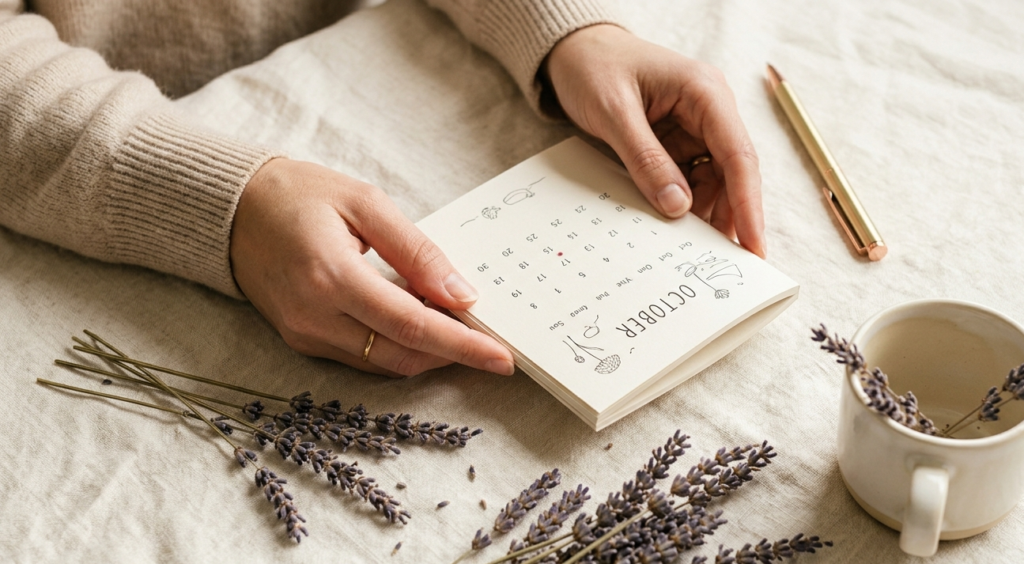
One of the most empowering things you can do when working on how to get regular periods naturally is to start tracking your cycle. Not just the start date but also your symptoms, mood, energy, sleep, and diet.
Over 2–3 months of data, patterns emerge that help you understand your hormonal triggers. Apps like Clue, Flo, or a simple notebook work equally well. The goal is awareness, not anxiety.
What to track:
- Cycle start and end dates
- Flow quality — light, medium, heavy, painful?
- Sleep duration and quality
- Stress levels (rate 1–10 daily)
- Diet — especially fat and calorie intake
- Exercise type and intensity
Frequently Asked Questions
Q: How long does it take to get regular periods naturally?
A: It depends on your root cause. Stress-related irregularity can improve within 4–6 weeks of consistent lifestyle changes. Hormonal imbalances like PCOS may take 3–6 months of combined dietary, herbal, and lifestyle support before significant improvement is seen.
Q: Can I get my period in 1 day naturally?
A: Not reliably. Natural methods like ginger tea, heat therapy, and exercise can encourage the body to begin menstruation when it’s already physiologically ready but they can’t force a cycle to start overnight if the hormones aren’t aligned. Think in terms of days to a week, not hours.
Q: Is it safe to use herbal remedies to get periods naturally?
A: Most food-based approaches (ginger, papaya, sesame seeds, turmeric) are safe for general use. Concentrated herbal supplements like Vitex or high-dose Vitamin C should be used cautiously and ideally after speaking with a healthcare provider, especially if you have existing medical conditions or are on medication.
Q: What is the best way to get periods naturally for someone with PCOS?
A: For PCOS, the most effective natural approaches combine a low-glycemic diet, regular moderate exercise (especially resistance training), spearmint tea to lower androgens, and inositol supplementation (Myo-Inositol has strong clinical evidence for PCOS). Stress management is also critical. Results typically appear within 2–4 months.
Q: How to get periods fast naturally at home without medication?
A: The fastest-acting natural approaches include heat therapy on the lower abdomen, ginger or parsley tea, Vitamin C-rich foods, a warm bath followed by castor oil massage, and light to moderate exercise. These work best when your body is physiologically close to menstruating they help tip the balance rather than force the process.
Q: Can stress alone delay my period?
A: Yes absolutely. Stress triggers cortisol release, which suppresses GnRH (the hormone that kick-starts the menstrual cycle). Even short-term intense stress like an exam week or a difficult personal event can delay or skip ovulation, pushing the entire cycle back by days or even weeks.
Q: When should I see a doctor instead of trying natural methods?
A: See a doctor if your period has been absent for more than 90 days, if you’ve had fewer than 6 periods in the past year, if your cycle is shorter than 21 days or longer than 35 days consistently, or if you experience severe pain, heavy bleeding, or other concerning symptoms. Natural methods are supportive not a substitute for medical evaluation.
References
- Berga, S.L. & Loucks, T.L. (2006). Use of cognitive behavior therapy for functional hypothalamic amenorrhea. Annals of the New York Academy of Sciences.
- Dennehy, C.E. (2006). The use of herbs and dietary supplements in gynecology. Journal of Midwifery & Women’s Health.
- Grant, P. (2010). Spearmint herbal tea has significant anti-androgen effects in polycystic ovarian syndrome. Phytotherapy Research.
- Unfer, V. et al. (2012). Effects of inositol(s) in women with PCOS: a systematic review of randomized controlled trials. Gynecological Endocrinology.
- World Health Organization. (2012). Medical eligibility criteria for contraceptive use. 4th edition. WHO Press.
- Stener-Victorin, E. et al. (2020). Role of physical exercise in PCOS. Molecular and Cellular Endocrinology.
- Chaudhary, R. (2019). Adaptogenic herbs in women’s health. Journal of Ayurveda and Integrative Medicine.
Disclaimer
This blog post is intended for general informational and educational purposes only. It does not constitute medical advice, diagnosis, or treatment.
The natural remedies and lifestyle changes discussed here are based on traditional use and general health research they are not a substitute for professional medical evaluation. Every woman’s body is different, and individual results will vary.
If you have concerns about your menstrual health, please consult a qualified gynecologist or healthcare provider before making changes to your health routine. The author and publisher accept no liability for actions taken based on the content of this article.