
Hormone test for women is one of the most important steps any woman can take toward understanding her own body. Hormones run virtually everything your mood, your sleep, your skin, your weight, and even your ability to get pregnant. Yet so many women go years without ever checking their hormone levels.
If you have been feeling off lately tired all the time, gaining weight without explanation, struggling with irregular periods, or dealing with mood swings that feel out of nowhere your hormones could be behind it all.
This guide breaks down everything you need to know about hormone testing for women: why it matters, which tests to ask for, what normal ranges look like, and when to see a doctor.
Why a Hormone Test for Women Is Not Optional — It’s Essential
A lot of women brush off symptoms like fatigue, brain fog, or low libido as just “stress” or “getting older.” But the truth is, these can be signs of a hormonal imbalance that is completely treatable once you know what you are dealing with.
Hormones are chemical messengers. They travel through your bloodstream and tell your organs what to do. When they are in balance, you feel energetic, clear-headed, and emotionally stable. When they are not, everything can fall apart.
Here are some common signs that it might be time to get a hormone test for women:
- Persistent fatigue even after a full night of sleep
- Irregular or painful periods
- Sudden weight gain, especially around the belly
- Hair thinning or unexplained hair loss
- Low sex drive
- Anxiety, depression, or dramatic mood changes
- Difficulty getting pregnant
- Hot flashes or night sweats
- Brain fog or difficulty concentrating
- Dry skin or adult acne
If two or more of these resonate with you, it is worth having a conversation with your doctor about hormone testing.
Types of Hormone Tests for Women You Should Know About
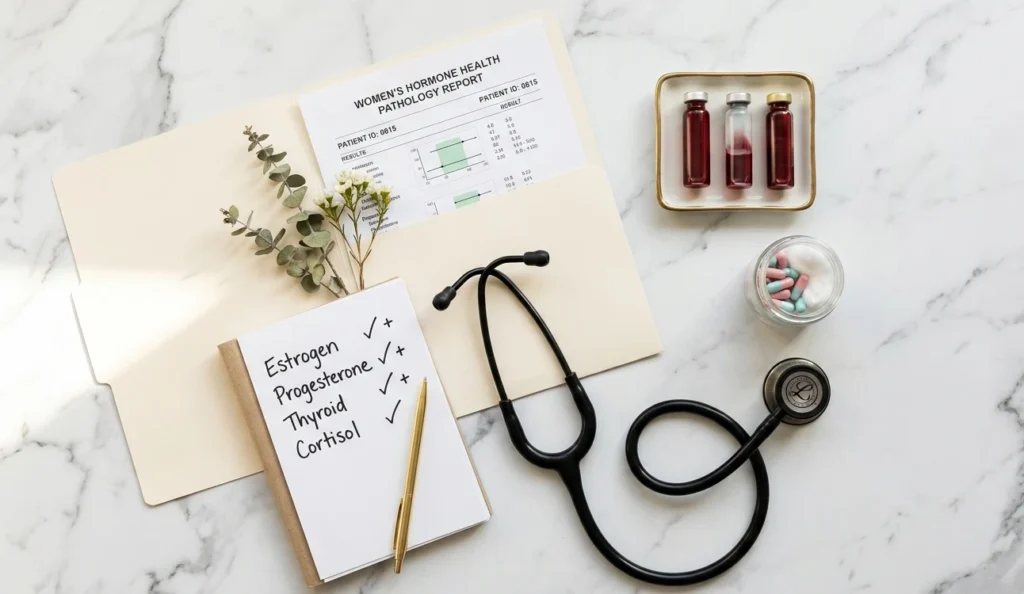
Not all hormone tests are the same. Depending on your symptoms and health history, your doctor may recommend one or several of the following tests.
Estrogen Levels: The Foundation of Female Health
Estrogen is the primary female sex hormone and plays a central role in reproductive health, bone density, and cardiovascular function. Low estrogen is often associated with perimenopause and menopause, while high estrogen can contribute to conditions like endometriosis or PCOS.
A hormone test for women almost always includes an estradiol (E2) test, which is the most active form of estrogen during the reproductive years.
Progesterone: The Calming Hormone
Progesterone works alongside estrogen to regulate your menstrual cycle and prepare the uterus for pregnancy. Low progesterone levels can lead to irregular periods, anxiety, difficulty sleeping, and trouble conceiving.
This test is usually done in the second half of your menstrual cycle (around day 21) to get the most accurate reading.
Thyroid Hormones: The Master Regulator
The thyroid gland is a small butterfly-shaped gland in your neck, but it controls an enormous amount of your body’s functions from metabolism and energy to temperature regulation and mood.
A comprehensive hormone test for women targeting thyroid function includes:
- TSH (Thyroid Stimulating Hormone) : the primary screening test
- Free T3 and Free T4 : active thyroid hormones
- Thyroid antibodies (TPO and anti-Tg) : to detect autoimmune thyroid disease
Hypothyroidism (underactive thyroid) is surprisingly common in women and is often misdiagnosed as depression or burnout.
Testosterone in Women: Yes, It Matters Too
Many women are surprised to learn that they produce testosterone too, just in smaller amounts than men. Testosterone in women supports libido, energy, muscle tone, and bone health. Too much testosterone can indicate PCOS, while too little can cause low energy and reduced sex drive.
FSH and LH: The Fertility Hormone Duo
Follicle Stimulating Hormone (FSH) and Luteinizing Hormone (LH) are produced by the pituitary gland and drive the ovulation cycle. These two are critical in any hormone test for women who are trying to conceive or who suspect they are entering perimenopause.
Elevated FSH levels, for instance, are often an early sign of diminishing ovarian reserve.
Cortisol: The Stress Hormone That Can Throw Everything Off
Cortisol is produced by the adrenal glands and helps your body respond to stress. Chronic high cortisol from prolonged stress can suppress other hormones, disrupt your cycle, cause weight gain, and impair your immune function.
A salivary cortisol test taken at multiple points during the day is often more informative than a single blood test because cortisol fluctuates throughout the day.
When Should You Get a Hormone Test for Women?
There is no single “right” age to start hormone testing. However, there are certain life stages and situations where it becomes particularly important.Natural Remedies for Hormonal Imbalance in Females: A Complete Guide That Actually Works
In Your 20s and 30s
If you are experiencing irregular periods, acne, unwanted hair growth, or difficulty getting pregnant, a hormone test for women in this age group can help identify PCOS, thyroid issues, or other hormonal conditions early on.
In Your 40s
Perimenopause typically begins in the mid-40s. Hormone testing can help confirm whether symptoms like hot flashes, sleep disturbances, and mood changes are related to hormonal shifts.
During Menopause and Beyond
After menopause, estrogen drops significantly, increasing risk for osteoporosis and cardiovascular disease. Regular hormone monitoring helps guide decisions about hormone replacement therapy (HRT) and other treatments.
How to Prepare for a Hormone Test for Women
Getting accurate results from your hormone test requires a little preparation. Here is what to keep in mind.
- Timing is everything: Many hormone levels fluctuate throughout your menstrual cycle. Your doctor will usually specify which day of your cycle to come in for blood work.
- Fasting may be required: Some tests require you to fast for 8–12 hours beforehand. Always confirm with your healthcare provider.
- Avoid intense exercise the day before: Strenuous activity can temporarily affect cortisol and testosterone levels.
- Go in the morning: Cortisol and testosterone levels are highest in the early morning hours, so morning testing often gives the most accurate readings.
- Tell your doctor about any medications: Hormonal birth control, antidepressants, and certain supplements can affect hormone levels.How to Increase Estrogen Naturally: A Complete Guide
Understanding Your Hormone Test Results for Women
Getting your results back can feel overwhelming if you are not sure what you are looking at. Here is a quick reference for common hormone levels in women.https://www.healthline.com/health/normal-hormone-levels-women
| Hormone | Normal Range (approx.) | Notes |
| Estradiol (E2) | 15–350 pg/mL | Varies by cycle phase |
| Progesterone | 0.1–25 ng/mL | Peaks in luteal phase |
| TSH | 0.4–4.0 mIU/L | Lower = more active thyroid |
| Free T4 | 0.8–1.8 ng/dL | Active thyroid hormone |
| FSH | 3–10 IU/L (follicular) | Higher = lower ovarian reserve |
| LH | 2–15 IU/L | Spikes at ovulation |
| Total Testosterone | 15–70 ng/dL | Varies by lab |
| Cortisol (AM) | 6–23 mcg/dL | Test between 7–9 AM |
Keep in mind: these are general reference ranges. What is “normal” can vary based on the lab, your age, where you are in your cycle, and your individual baseline. Always review results with your doctor rather than interpreting them alone.
What Happens If Your Hormone Test for Women Shows an Imbalance?
An abnormal hormone test is not the end of the world it is actually the beginning of getting answers. Depending on what is found, your doctor may recommend one or more of the following approaches.https://www.mayoclinic.org/diseases-conditions/hormone-therapy/about/pac-20394539
Lifestyle Changes First
For mild imbalances, simple lifestyle changes can make a significant difference. Improving sleep quality, managing stress through mindfulness or yoga, eating an anti-inflammatory diet, reducing alcohol, and getting regular moderate exercise can all help rebalance hormones naturally.
Medication and Hormone Replacement Therapy (HRT)
For more significant hormonal issues, your doctor may recommend medications. Thyroid conditions are typically managed with synthetic thyroid hormone (levothyroxine). Menopausal hormone decline may be addressed with hormone replacement therapy, which comes in many forms pills, patches, gels, and vaginal rings.
For PCOS, birth control pills or metformin are often prescribed to regulate hormone levels and manage symptoms.
Bioidentical Hormone Therapy
Bioidentical hormones are derived from plant sources and are chemically identical to the hormones your body produces. Some women prefer this approach over synthetic options, though it is important to work with a knowledgeable healthcare provider to ensure safety and effectiveness.
Where to Get a Hormone Test for Women
You have more options than ever when it comes to hormone testing.
- Your primary care physician or OB-GYN ; the most common starting point
- An endocrinologist , a specialist for hormonal and metabolic conditions
- A functional medicine doctor , takes a more holistic approach to hormone health
- At-home hormone test kits , companies like Everlywell, LetsGetChecked, and others now offer saliva and blood spot tests you can do at home
At-home tests can be a convenient starting point, but they should not replace a proper clinical evaluation, especially if you are experiencing significant symptoms.
Frequently Asked Questions About Hormone Test for Women
How often should women get a hormone test?
There is no universal answer. Women with known hormonal conditions may need testing every 3–6 months to monitor their treatment. Healthy women without symptoms may only need periodic testing at key life stages puberty, pregnancy planning, perimenopause, and menopause.
Does a hormone test for women require a doctor’s order?
In most countries, yes a doctor’s prescription or referral is needed to order blood work through a lab. However, many at-home testing companies now allow direct-to-consumer testing without a referral.
Can stress affect the results of a hormone test for women?
Absolutely. Acute stress can temporarily spike cortisol levels and suppress sex hormones. That is why doctors often recommend testing at a relatively calm time and avoiding major stressors in the days before your test.
Is a blood test the only way to check hormone levels?
No. Hormones can also be measured through saliva, urine, and dried blood spot tests. Each method has its advantages. Saliva testing is useful for free (unbound) hormones, while urine testing gives a picture of hormone metabolism over time. Blood tests remain the gold standard for most clinical purposes
Final Thoughts: Take Control with a Hormone Test for Women
Your hormones tell the story of your health. And a hormone test for women is one of the most empowering things you can do to start reading that story clearly.
Do not wait until symptoms are severe. Early detection of hormonal imbalances means earlier treatment, better outcomes, and a better quality of life. Whether you are 25 or 55, whether you are trying to conceive or just trying to feel like yourself again hormone testing gives you the information you need to make smart, informed decisions about your health.
Talk to your doctor today. Ask about getting a hormone test for women that covers all the key markers. You deserve to understand what is happening inside your own body.
References
Endocrine Society. (2023). Female Hypogonadism. https://www.endocrine.org
Mayo Clinic. (2024). Thyroid Function Tests. https://www.mayoclinic.org
Harvard Health Publishing. (2023). Hormones and Women’s Health. https://www.health.harvard.edu
National Institutes of Health (NIH). (2024). Women and Hormones. https://www.nih.gov
American College of Obstetricians and Gynecologists (ACOG). (2023). Hormone Therapy for Menopause. https://www.acog.org
PCOS Awareness Association. (2024). Understanding PCOS and Hormone Imbalance. https://www.pcosaa.org
Journal of Clinical Endocrinology & Metabolism. (2023). Reference Intervals for Steroid Hormones. Oxford University Press.
Medical Disclaimer
The information provided in this blog post is intended for general informational and educational purposes only. It is not a substitute for professional medical advice, diagnosis, or treatment. Always seek the guidance of your physician, gynecologist, endocrinologist, or another qualified health professional with any questions you may have regarding a medical condition or hormonal health concern.
Never disregard professional medical advice or delay seeking it because of something you have read in this article. Hormone reference ranges mentioned in this post are approximate and may vary between laboratories and individuals. Results should always be interpreted by a qualified healthcare provider in the context of your full clinical history.
The author and publisher of this content are not responsible for any adverse effects or consequences resulting from the use of any suggestions or information contained in this article. If you are experiencing a medical emergency, please contact your local emergency services immediately.