
How to increase estrogen naturally is one of the most searched health questions among women today and for good reason. Estrogen is not just a “female hormone.” It is the cornerstone of hormonal balance, affecting everything from bone density and cardiovascular health to mood, skin, and reproductive function.
When estrogen levels drop, the effects can be immediate and uncomfortable: hot flashes, brain fog, low libido, irregular periods, and poor sleep. While hormone replacement therapy (HRT) is a valid medical option, many women prefer to explore natural strategies first.
The good news? There are several well-researched, practical ways to support healthy estrogen levels without synthetic hormones. This guide walks you through all of them.
What Is Estrogen and Why Does It Matter?
Estrogen is actually a group of hormones primarily estradiol, estrone, and estriol produced mainly in the ovaries, with smaller amounts made in the adrenal glands and fat tissue. It plays a crucial role in:
- Regulating the menstrual cycle
- Supporting bone health and density
- Maintaining cardiovascular function
- Keeping skin, hair, and nails healthy
- Regulating mood and cognitive function
- Supporting vaginal health and libido
Estrogen levels naturally fluctuate throughout a woman’s life peaking during reproductive years and declining significantly during perimenopause and menopause. But age is not the only factor. Poor diet, chronic stress, over-exercising, and certain environmental toxins can all cause estrogen to drop earlier than expected.
How to Increase Estrogen Naturally: Top Evidence-Based Strategies
If you are wondering how to increase estrogen naturally, the following methods are rooted in nutritional science, lifestyle medicine, and herbal research. These are not quick fixes they work best when practiced consistently over time.
1. Eat Phytoestrogen-Rich Foods
Phytoestrogens are plant compounds that mimic estrogen in the body by binding to estrogen receptors. They are not identical to human estrogen, but they can have a mild estrogenic effect, which is helpful when your levels are low.
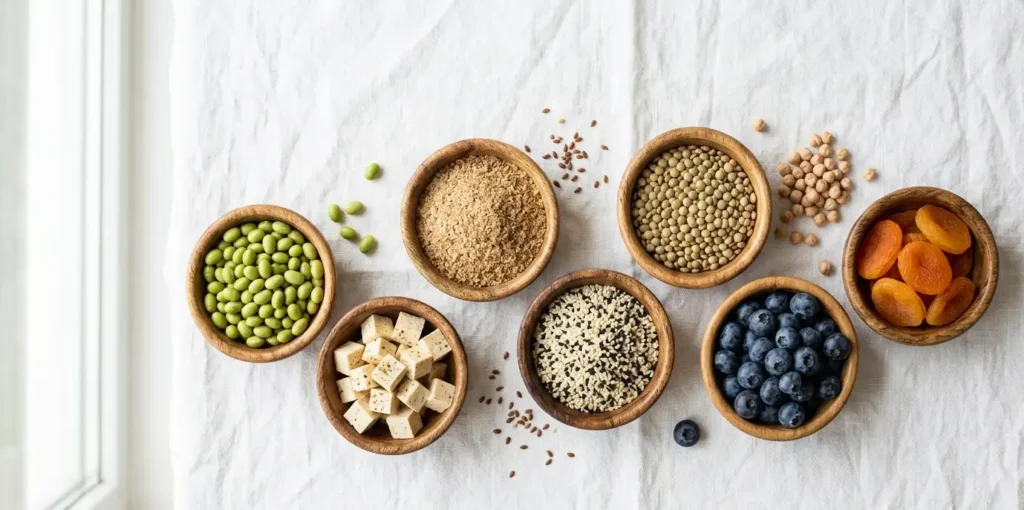
Best Phytoestrogen Foods to Include Daily
- Soybeans and tofu : one of the richest sources of isoflavones
- Flaxseeds :packed with lignans, a type of phytoestrogenhttps://www.webmd.com/diet/features/flaxseed-and-flaxseed-oil
- Sesame seeds : a surprisingly powerful source
- Chickpeas and lentils : great plant-based estrogen boosters
- Dried apricots, dates, and prunes
- Berries : strawberries, blueberries, and raspberries
- Whole grains like oats, barley, and rye
Flaxseeds deserve special mention. A 2007 study published in the Journal of Clinical Endocrinology found that ground flaxseed can significantly influence estrogen metabolism. Add 1-2 tablespoons to your morning smoothie or yogurt for a simple daily boost.https://www.healthline.com/nutrition/phytoestrogens-and-women
2. Support Your Gut Health
There is a direct connection between gut health and estrogen levels : so much so that researchers have coined the term “estrobolome” to describe the collection of gut bacteria that metabolize estrogen.
When your gut microbiome is out of balance (a condition called dysbiosis), your body may not properly recirculate estrogen, leading to lower overall levels. To naturally support estrogen metabolism through gut health:
- Eat fermented foods like yogurt, kimchi, sauerkraut, and kefir daily
- Increase dietary fiber intake : aim for 25-30g per day
- Take a high-quality probiotic if needed
- Reduce sugar and processed food intake, which disrupts the microbiome
3. Manage Stress — Cortisol Is Estrogen’s Enemy
This is one of the most overlooked ways to learn how to increase estrogen naturally. Chronic stress triggers cortisol production, and cortisol competes with estrogen for receptors and can suppress its production over time.
When your adrenal glands are constantly pumping out stress hormones, your body essentially “steals” the precursor hormone pregnenolone away from estrogen production a phenomenon called “pregnenolone steal.”
Practical stress reduction strategies:
- Daily meditation or deep-breathing exercises (even 10 minutes helps)
- Yoga : especially restorative and yin yoga styles
- Journaling to process emotions and reduce mental load
- Reducing caffeine, which elevates cortisol
- Prioritizing quality sleep : at least 7-8 hours per night
4. Maintain a Healthy Body Weight
Body fat is actually a secondary site of estrogen production. Fat cells (adipocytes) contain an enzyme called aromatase that converts androgens into estrogen. This is why very lean women and those with low body fat often experience low estrogen symptoms.
That said, balance is key. Excess body fat can lead to estrogen dominance, which brings its own set of problems. The goal is a healthy BMI in the 18.5–24.9 range, which supports optimal estrogen production without excess.
5. Exercise the Right Way
Exercise is a double-edged sword when it comes to estrogen. Moderate, regular exercise supports hormonal balance and reduces estrogen-disrupting inflammation. But overtraining especially long-distance running and extreme caloric restriction can suppress estrogen production significantly.
For the best hormonal outcomes, aim for:
- Strength training 3-4 times per week (builds muscle and supports hormones)
- Moderate cardio like brisk walking or cycling
- Yoga or Pilates for stress management
- Avoiding excessive high-intensity training without adequate recovery
Herbs and Supplements That May Naturally Increase Estrogen
Certain herbs have been used for centuries in traditional medicine to support female hormone health. Modern research has started validating many of these botanical remedies. Always consult your healthcare provider before starting any supplement.
Black Cohosh
Black cohosh (Actaea racemosa) is one of the most studied herbs for menopausal symptoms. It does not directly raise estrogen but acts on serotonin receptors in a way that mimics some estrogenic effects. Clinical trials have shown it can reduce hot flashes, night sweats, and mood swings.
Red Clover
Red clover is rich in isoflavones plant-based compounds that weakly mimic estrogen. Research published in Gynecological Endocrinology found that red clover extract helped improve estrogen-related symptoms in perimenopausal women. It is available as a supplement or tea.
Dong Quai
A staple of Traditional Chinese Medicine, dong quai has been used for thousands of years to support female reproductive health. It is thought to have mild phytoestrogenic properties and is often used to ease menstrual irregularities associated with low estrogen.
Maca Root
Maca does not directly contain phytoestrogens, but it works as an adaptogen that helps the body regulate hormone production more efficiently. Several studies suggest it can help reduce menopausal symptoms including low libido and mood instability likely by supporting the hypothalamic-pituitary axis, which controls estrogen secretion.
Vitamin D and Boron
Two often-overlooked nutrients play a significant role in estrogen metabolism. Vitamin D deficiency has been linked to lower estrogen levels, and supplementing with vitamin D3 (2000-4000 IU daily, or as directed by a doctor) may support hormonal balance.
Boron, a trace mineral found in nuts, avocados, and prunes, has been shown in studies to increase blood estrogen levels by reducing its breakdown in the body. Even a small dietary intake of 3mg per day can make a measurable difference.
Reduce Exposure to Estrogen Disruptors
Sometimes the question is not just how to increase estrogen naturally it is also about protecting the estrogen you already have from being disrupted. Endocrine disruptors are chemicals that interfere with hormone function, including estrogen.Low Estrogen Symptoms in Women: What Your Body Is Trying to Tell You
Common sources and how to avoid them:
- BPA and plastics : switch to glass, stainless steel, or BPA-free containers
- Pesticides : choose organic produce when possible, especially the “Dirty Dozen”
- Synthetic fragrances : choose fragrance-free personal care and cleaning products
- Parabens in cosmetics : read labels and opt for paraben-free products
- Excess alcohol : alcohol impairs liver function, which metabolizes estrogen
Sleep’s Role in Naturally Increasing Estrogen
Poor sleep is a silent saboteur of hormonal health. During deep sleep, your body performs critical hormonal maintenance, including the regulation of estrogen and progesterone. Studies show that sleep deprivation increases cortisol and inflammatory markers, both of which suppress estrogen production.
To optimize sleep for hormonal health:
- Stick to a consistent sleep and wake time every day
- Keep your bedroom cool and dark , optimal conditions for hormonal regulation
- Avoid screens at least 1 hour before bed
- Consider magnesium glycinate at night it promotes relaxation and supports hormone balanceHow to Increase Progesterone Naturally: A Complete Guide
Frequently Asked Questions (FAQ)
Q1: Can I increase estrogen naturally without medication?
Yes, absolutely. Through dietary changes, herbal support, stress management, and lifestyle adjustments, many women are able to meaningfully support estrogen levels naturally. However, if you have severely low estrogen due to menopause or a medical condition, speak with your doctor about whether additional treatment is needed alongside natural approaches.
Q2: How long does it take to naturally increase estrogen?
Natural approaches typically take 4-12 weeks to show measurable improvements. Phytoestrogen-rich diets, stress reduction, and herbal supplements all work gradually. Consistency matters more than intensity. Track your symptoms monthly to gauge progress.
Q3: What foods are highest in natural estrogen?
The richest natural sources of phytoestrogens include soybeans and soy products (tofu, edamame, soy milk), flaxseeds, sesame seeds, chickpeas, lentils, dried apricots, and berries. Flaxseeds and soy have the highest concentrations and have been studied the most.
Q4: Is soy safe for increasing estrogen naturally?
For most healthy women, moderate soy consumption (1-2 servings per day) is considered safe and can be helpful for supporting estrogen levels. Concerns about soy and cancer risk largely stem from misinterpreted research. Current evidence suggests that whole soy foods are safe and potentially beneficial. Avoid highly processed soy products and opt for organic, non-GMO varieties.
Q5: Can stress cause low estrogen?
Yes. Chronic stress elevates cortisol, which disrupts hormonal balance and can suppress estrogen production through a mechanism called pregnenolone steal. Managing stress through mindfulness, adequate sleep, and moderate exercise is one of the most effective ways to support healthy estrogen levels naturally.
Q6: Are there any risks to trying to increase estrogen naturally?
Natural approaches are generally safe, but it is still possible to overdo certain things. Excessive phytoestrogen supplementation (not food), for example, could theoretically cause hormonal imbalance in sensitive individuals. Always prefer food sources over concentrated supplements, and consult a healthcare provider if you have a history of hormone-sensitive conditions like breast cancer or endometriosis.
References
The following sources were consulted in the preparation of this article. All cited research is from peer-reviewed journals and reputable health organizations.
1. Brzezinski, A., & Debi, A. (2007). Phytoestrogens: the “natural” selective estrogen receptor modulators? European Journal of Obstetrics & Gynecology and Reproductive Biology.
2. Kwa, M., Plottel, C. S., Blaser, M. J., & Adams, S. (2016). The Intestinal Microbiome and Estrogen Receptor-Positive Female Breast Cancer. Journal of the National Cancer Institute.
3. Lethaby, A., Marjoribanks, J., Kronenberg, F., Roberts, H., Eden, J., & Brown, J. (2013). Phytoestrogens for menopausal vasomotor symptoms. Cochrane Database of Systematic Reviews.
4. Domínguez-López, I., Yago-Aragón, M., Salas-Huetos, A., Tresserra-Rimbau, A., & Hurtado-Barroso, S. (2020). Effects of Dietary Phytoestrogens on Hormones throughout a Human Lifespan: A Review. Nutrients.
5. Nielsen, F. H. (1994). Biochemical and physiologic consequences of boron deprivation in humans. Environmental Health Perspectives.
6. Stachowiak, G., Pertynski, T., & Pertynska-Markowska, M. (2015). Metabolic disorders in menopause. Menopause Review / Przegląd Menopauzalny.
7. Prior, J. C. (2019). Progesterone Is Important for Transgender Women’s Therapy—Applying Evidence for the Benefits of Progesterone in Cisgender Women. Journal of Clinical Endocrinology & Metabolism.
8. Harvard T.H. Chan School of Public Health – The Nutrition Source: Straight Talk About Soy. https://www.hsph.harvard.edu/nutritionsource/
Disclaimer
DISCLAIMER: This article is intended for informational and educational purposes only. It is not a substitute for professional medical advice, diagnosis, or treatment.
The content presented here reflects general wellness information and should not be used to self-diagnose or self-treat any medical condition. Estrogen imbalances can stem from a variety of underlying medical conditions that require professional evaluation.
Always consult a qualified healthcare provider or endocrinologist before making significant changes to your diet, starting herbal supplements, or altering any existing treatment plan. Individual results will vary. The author and publisher of this content bear no responsibility for any adverse effects arising from the use or application of the information contained in this article.
If you are pregnant, nursing, on prescription medications, or have a hormone-sensitive condition such as breast cancer, endometriosis, or uterine fibroids, please consult your physician before following any of the recommendations in this guide.