
Vitamin C rich foods in India are easy to find, affordable, and delicious. From the humble amla to fresh guava, lemons, oranges, and green vegetables, India offers plenty of natural food options that can help you meet your daily vitamin C requirements.
Vitamin C is one of the most important nutrients our body needs. It supports the immune system, helps maintain healthy skin, protects cells from oxidative damage, and improves the absorption of iron from plant-based foods.
The best part? You don’t need expensive supplements or imported fruits to get enough vitamin C. Many everyday Indian fruits and vegetables are naturally rich in this essential nutrient.
In this article, we will explore the 15 best vitamin C rich foods in India, their health benefits, nutritional value, and simple ways to add them to your everyday meals.
Why Is Vitamin C Important for Your Body?
Vitamin C, also known as ascorbic acid, is a water-soluble vitamin that plays several important roles in maintaining good health.
Since our body cannot produce or store large amounts of vitamin C, we need to get it regularly through our diet.
Here are some important benefits of vitamin C.
1. Supports a Healthy Immune System
Vitamin C helps support the normal functioning of immune cells. It also contributes to the body’s natural defence against infections.
Eating vitamin C-rich fruits and vegetables regularly can help maintain your overall immune health.
2. Helps Maintain Healthy Skin
Vitamin C plays an important role in collagen production. Collagen is a protein that helps keep your skin firm and supports the structure of your skin.
Getting enough vitamin C through your diet helps maintain healthy skin and supports normal wound healing.
3. Improves Iron Absorption
This is particularly important for people following a vegetarian or vegan diet.
Vitamin C improves the absorption of non-heme iron, which is the type of iron found in plant-based foods such as spinach, lentils, beans, and chickpeas.
For example, adding lemon juice to your dal or having guava with a meal can help your body absorb more iron.Iron Rich Foods for Women: The Complete Guide to Beating Fatigue and Feeling Like Yourself Again
4. Protects Cells from Oxidative Stress
Vitamin C acts as an antioxidant. It helps protect body cells from damage caused by free radicals.
This is one reason why including colourful fruits and vegetables in your daily diet is important.
15 Best Vitamin C Rich Foods in India
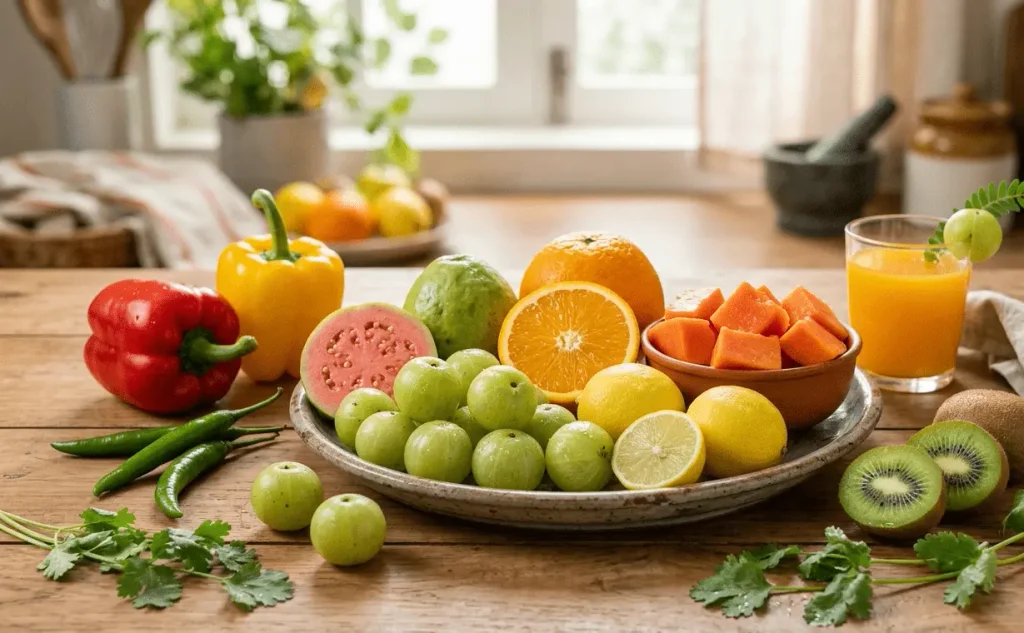
India has a wonderful variety of fruits and vegetables that provide vitamin C naturally.
Let’s look at some of the best options you can easily find in local vegetable markets and grocery stores.
1. Amla (Indian Gooseberry)
Amla is one of the most powerful natural sources of vitamin C available in India.
It has been used in traditional Indian diets for generations. Its slightly sour and bitter taste makes it a unique addition to everyday meals.
Vitamin C content: Approximately 250–600 mg per 100 g, depending on variety and freshness.
Health benefits:
- Supports normal immune function.
- Provides antioxidant compounds.
- Helps support collagen production.
- Adds variety to a healthy diet.
How to eat it: You can eat fresh amla, prepare amla chutney, add it to salads, or enjoy homemade amla juice without excessive added sugar.
If you are looking for an affordable and locally available vitamin C source, amla is an excellent choice.
2. Guava (Amrood)
Guava is another excellent source of vitamin C and is easily available across India.
In fact, guava can contain more vitamin C than many commonly consumed citrus fruits.
Vitamin C content: Approximately 200–250 mg per 100 g.
Health benefits:
- Supports immune health.
- Provides dietary fibre.
- Contains antioxidants.
- Supports healthy digestion as part of a balanced diet.
How to eat it: Enjoy fresh guava as an evening snack, add it to fruit salads, or sprinkle a little black salt and roasted cumin powder over sliced guava.
It is tasty, filling, and budget-friendly.
3. Orange (Santra)
Oranges are among the most popular vitamin C-rich fruits in India.
They are refreshing, naturally sweet, and widely available during the winter season.
Vitamin C content: Approximately 45–55 mg per 100 g.
Health benefits:
- Supports immune function.
- Helps in collagen formation.
- Provides antioxidants.
- Contributes to daily hydration.
How to eat it: Eat a whole orange instead of drinking packaged orange juice. Whole fruit provides dietary fibre and helps you feel full for longer.
4. Lemon (Nimbu)
Lemon is one of the easiest ways to add vitamin C to your everyday Indian meals.
Although we usually consume it in small quantities, it can still contribute to our daily vitamin C intake.
Vitamin C content: Approximately 30–55 mg per 100 g of edible portion.
Health benefits:
- Helps improve plant-based iron absorption.
- Provides antioxidants.
- Adds flavour without requiring extra salt.
- Supports normal collagen production.
How to eat it: Squeeze fresh lemon juice over dal, salads, sprouts, poha, or vegetable dishes.
A simple glass of lemon water can also be refreshing, although it should not replace whole fruits and vegetables.
5. Papaya
Papaya is a nutritious tropical fruit that provides vitamin C along with fibre and other beneficial nutrients.
It is commonly available in Indian markets throughout much of the year.
Vitamin C content: Approximately 55–65 mg per 100 g.
Health benefits:
- Supports immune health.
- Provides dietary fibre.
- Contains antioxidant nutrients.
- Supports normal skin health.
How to eat it: Enjoy ripe papaya as a breakfast fruit or add it to a fresh fruit bowl.
6. Kiwi
Kiwi is becoming increasingly popular in India because of its refreshing taste and nutritional value.
Although it may cost more than locally grown fruits, it is still a useful addition to a varied diet.
Vitamin C content: Approximately 90–95 mg per 100 g.
Health benefits:
- Supports normal immune function.
- Provides antioxidants.
- Contains dietary fibre.
- Supports collagen formation.
How to eat it: Eat fresh kiwi, add it to smoothies, or combine it with other fruits in a breakfast bowl.
7. Capsicum (Shimla Mirch)
Many people associate vitamin C mainly with fruits, but vegetables can also be excellent sources.
Capsicum, especially red and yellow varieties, contains a good amount of vitamin C.
Vitamin C content: Approximately 80–130 mg per 100 g, depending on colour and variety.
Health benefits:
- Provides antioxidants.
- Supports immune function.
- Adds colour and nutrients to meals.
- Helps support healthy skin.
How to eat it: Add capsicum to vegetable pulao, sandwiches, salads, paneer dishes, or lightly cooked stir-fries.
Avoid excessive cooking because heat can reduce vitamin C content.
8. Strawberries
Strawberries are delicious fruits that provide vitamin C and other antioxidant compounds.
They are especially popular during the winter season in many parts of India.
Vitamin C content: Approximately 55–60 mg per 100 g.
Health benefits:
- Supports immune health.
- Provides antioxidants.
- Contains dietary fibre.
- Contributes to healthy skin.
How to eat it: Enjoy fresh strawberries, add them to oatmeal, or mix them into homemade fruit salads.
9. Pineapple (Ananas)
Pineapple is a refreshing tropical fruit that contains vitamin C and other useful nutrients.
Its sweet and slightly tangy flavour makes it a popular choice during hot weather.
Vitamin C content: Approximately 45–50 mg per 100 g.
Health benefits:
- Supports normal immune function.
- Provides antioxidants.
- Contains water and dietary fibre.
- Adds variety to a balanced diet.
How to eat it: Enjoy fresh pineapple slices or add small pieces to fruit salads.
10. Broccoli
Broccoli is a nutritious green vegetable that provides vitamin C, fibre, and several other vitamins and minerals.
It may not be a traditional everyday vegetable in every Indian household, but it is becoming increasingly available.
Vitamin C content: Approximately 85–90 mg per 100 g when raw.
Health benefits:
- Supports immune health.
- Provides antioxidant compounds.
- Supports digestive health.
- Contributes to a balanced diet.
How to eat it: Lightly steam broccoli, add it to vegetable stir-fries, or prepare broccoli soup.
11. Tomato (Tamatar)
Tomatoes are among the most commonly used vegetables in Indian cooking.
They provide vitamin C along with lycopene, an antioxidant compound.
Vitamin C content: Approximately 12–20 mg per 100 g.
Health benefits:
- Provides antioxidants.
- Supports normal immune function.
- Adds nutrients to everyday meals.
- Contributes to overall dietary variety.
How to eat it: Add fresh tomatoes to salads, sandwiches, chutneys, and vegetable dishes.
Remember that prolonged cooking can reduce some of the vitamin C content.
12. Green Chillies (Hari Mirch)
Green chillies are small but can be surprisingly rich in vitamin C.
They are commonly used in Indian cuisine and can add flavour as well as nutrients to meals.
Vitamin C content: Approximately 100–140 mg per 100 g, depending on variety.
Health benefits:
- Provides vitamin C.
- Contains antioxidant compounds.
- Adds flavour to meals.
- Supports normal immune function.
How to eat it: Add small amounts of fresh green chilli to chutneys, salads, and vegetable dishes according to your spice tolerance.
13. Cabbage (Patta Gobhi)
Cabbage is an affordable vegetable that provides vitamin C and dietary fibre.
It is easily available in Indian markets and can be included in several everyday recipes.
Vitamin C content: Approximately 30–40 mg per 100 g.
Health benefits:
- Supports immune function.
- Provides dietary fibre.
- Contains antioxidant compounds.
- Adds variety to everyday meals.
How to eat it: Prepare cabbage sabzi, add it to salads, or use it in homemade vegetable parathas.
14. Cauliflower (Phool Gobhi)
Cauliflower is another commonly available Indian vegetable that provides vitamin C.
It is versatile and can be used in a variety of homemade dishes.
Vitamin C content: Approximately 45–50 mg per 100 g.
Health benefits:
- Supports normal immune function.
- Provides fibre.
- Contains antioxidant compounds.
- Contributes to a balanced diet.
How to eat it: Enjoy cauliflower as aloo gobhi, vegetable curry, or lightly cooked stir-fried vegetables.
15. Mango
Mango is one of India’s favourite seasonal fruits.
Although it is better known for its sweet taste, mango also provides vitamin C, along with vitamin A-related carotenoids.
Vitamin C content: Approximately 25–40 mg per 100 g, depending on variety and ripeness.
Health benefits:
- Provides antioxidants.
- Supports immune health.
- Contains vitamin A-related nutrients.
- Adds natural sweetness to your diet.
How to eat it: Enjoy fresh mango slices, add them to fruit bowls, or prepare homemade mango smoothies without excessive added sugar.
Comparison of Vitamin C Rich Foods in India
Here is a quick comparison of the approximate vitamin C content of some popular foods.https://www.nin.res.in/ebooks/IFCT2017.pdf
| Food | Vitamin C per 100 g |
|---|---|
| Amla | 250–600 mg |
| Guava | 200–250 mg |
| Green chillies | 100–140 mg |
| Red/yellow capsicum | 80–130 mg |
| Kiwi | 90–95 mg |
| Broccoli | 85–90 mg |
| Papaya | 55–65 mg |
| Strawberries | 55–60 mg |
| Orange | 45–55 mg |
| Cauliflower | 45–50 mg |
| Pineapple | 45–50 mg |
| Lemon | 30–55 mg |
| Cabbage | 30–40 mg |
| Mango | 25–40 mg |
| Tomato | 12–20 mg |
Note: These are approximate values. Actual vitamin C levels can vary depending on the variety, growing conditions, freshness, storage, and cooking method.
How Much Vitamin C Does Your Body Need Daily?
The amount of vitamin C required depends on age, sex, and life stage.
For most healthy adults, commonly used dietary reference values are:
- Adult men: Around 90 mg per day.
- Adult women: Around 75 mg per day.
- Pregnancy: Around 85 mg per day.
- Breastfeeding: Around 120 mg per day.
People who smoke generally need an additional 35 mg daily.
These values are general guidelines. Individual nutritional requirements may differ.
The good news is that you can meet your daily vitamin C needs through ordinary Indian foods.
For example, one medium guava can provide more than the daily requirement for many adults.https://ods.od.nih.gov/factsheets/VitaminC-Consumer
How to Include Vitamin C Rich Foods in Your Daily Indian Diet
You don’t need to make major changes to your eating habits to get more vitamin C.
A few simple food choices can make a meaningful difference.
Here is an example of how you can include vitamin C-rich foods throughout your day.
Morning
Start your day with a seasonal fruit such as guava, papaya, or orange.
You can also include fresh amla as part of your breakfast.
Breakfast
Add tomatoes, capsicum, or fresh coriander to your poha, upma, or vegetable sandwich.
These small additions can improve the nutritional value of your meal.
Lunch
Squeeze fresh lemon juice over dal, sprouts, or salads.
You can also include cabbage, capsicum, and fresh tomato in your lunch.
Evening Snack
Instead of packaged snacks, try fresh guava, orange slices, or strawberries.
These fruits provide vitamin C along with other useful nutrients.
Dinner
Include vegetables such as broccoli, cauliflower, cabbage, or capsicum in your dinner.
Try not to overcook them if you want to preserve more vitamin C.
Tips to Preserve Vitamin C in Fruits and Vegetables
Vitamin C is sensitive to heat, light, oxygen, and prolonged storage.
Therefore, the way you prepare and store food can affect how much vitamin C you actually consume.
Follow these simple tips:
- Eat fruits fresh whenever possible.
- Avoid cutting fruits and vegetables too far in advance.
- Store cut fruits in a covered container in the refrigerator.
- Wash vegetables before cutting rather than soaking cut vegetables for long periods.
- Prefer steaming or lightly cooking vegetables instead of prolonged boiling.
- Avoid overcooking vitamin C-rich vegetables.
- Add lemon juice after cooking rather than boiling it for a long time.
These simple habits can help preserve more of the nutrients in your everyday food.
Common Myths About Vitamin C
There is a lot of information about vitamin C online, but not everything you read is accurate.
Let’s clear up a few common misconceptions.
Myth 1: Only Oranges Contain Vitamin C
This is not true.
Amla, guava, capsicum, green chillies, papaya, and several other Indian foods provide vitamin C.
Myth 2: More Vitamin C Always Means Better Immunity
Your body needs an adequate amount of vitamin C, but consuming excessive amounts does not automatically make your immune system stronger.
A balanced diet is more important than focusing on a single nutrient.
Myth 3: Vitamin C Supplements Are Always Better Than Food
For most healthy people, a balanced diet can provide sufficient vitamin C.
Whole fruits and vegetables also provide fibre and other beneficial nutrients that supplements may not contain.
Supplements may be useful in certain situations, but they should not replace a healthy diet without a good reason.
Myth 4: Cooking Completely Destroys Vitamin C
Cooking can reduce vitamin C, especially when vegetables are boiled for long periods.
However, not all cooking methods destroy all the vitamin C. Light steaming and shorter cooking times can help preserve more of it.
Frequently Asked Questions About Vitamin C Rich Foods in India
1. Which Indian fruit has the highest vitamin C?
Amla is one of the richest natural sources of vitamin C in India. Guava is another excellent option and is widely available.
2. Is guava better than orange for vitamin C?
Generally, yes. Guava contains considerably more vitamin C per 100 g than orange, although the exact amount varies with the variety and freshness.
3. Can I eat amla every day?
Most healthy adults can include fresh amla in a balanced diet. However, portion size and individual tolerance matter. People with specific medical conditions should seek personalised dietary advice.
4. Which vegetables are rich in vitamin C?
Capsicum, broccoli, green chillies, cauliflower, cabbage, and tomatoes are some vegetables that provide vitamin C.
5. Does lemon water provide vitamin C?
Yes. Fresh lemon juice contains vitamin C. However, the amount depends on how much juice you use. Lemon water should be considered a refreshing addition rather than your only source of vitamin C.
6. Does vitamin C improve skin health?
Vitamin C supports collagen production and protects cells from oxidative stress. Getting enough vitamin C through food contributes to normal skin health.
7. Can I get enough vitamin C from an Indian vegetarian diet?
Absolutely. Indian vegetarian diets can provide plenty of vitamin C through amla, guava, oranges, papaya, capsicum, tomatoes, and green vegetables.
Conclusion
Including vitamin C rich foods in India in your everyday diet is easier than you might think.
You don’t need expensive supplements or complicated diet plans to get this important nutrient.
Simple foods such as amla, guava, oranges, papaya, lemons, capsicum, and green vegetables can help you meet your daily vitamin C requirements while adding flavour and variety to your meals.
Try to eat different seasonal fruits and vegetables instead of depending on just one food.
Remember, good health comes from consistent eating habits, a balanced diet, regular physical activity, and proper sleep.
Start with small changes today. Add a guava to your breakfast, squeeze some lemon over your dal, or include fresh vegetables in your lunch.
These simple choices can make your daily diet healthier and more nutritious.
Pingback: 10 Iron Rich Foods for Women (Backed by Science)