Fiber rich Indian food is more accessible than you think — and your traditional kitchen is already full of it.
From lentil-based dals to leafy greens and whole grain rotis, the Indian diet has always been naturally high in dietary fiber. Yet most Indians still fall short of the recommended daily intake of 25–38 grams.
This guide breaks down the best fiber rich Indian foods, their health benefits, and practical ways to add more fiber to your everyday meals — without overhauling your entire diet.
What Is Dietary Fiber and Why Does It Matter?
Dietary fiber is the indigestible part of plant foods. It passes through your digestive system mostly intact, feeding beneficial gut bacteria and keeping your bowel movements regular.
There are two main types of fiber:
- Soluble fiber: Dissolves in water and forms a gel-like substance. Helps lower blood sugar and cholesterol.
- Insoluble fiber: Does not dissolve in water. Adds bulk to stool and prevents constipation.
Most fiber rich Indian food sources contain a mix of both types, making them excellent for overall digestive and metabolic health.
Top Fiber Rich Indian Foods You Should Eat Every Day
Here are the best fiber rich Indian food sources, grouped by category, with approximate fiber content per serving.
1. Lentils and Legumes (Dal, Rajma, Chana)
Lentils and legumes are the backbone of fiber rich Indian food. They are affordable, protein-packed, and incredibly versatile.
| Food | Serving Size | Fiber Content |
| Masoor Dal (Red Lentils) | 1 cup cooked | ~7.8 g |
| Rajma (Kidney Beans) | 1 cup cooked | ~13 g |
| Chana Dal (Split Chickpeas) | 1 cup cooked | ~12 g |
| Moong Dal (Green Gram) | 1 cup cooked | ~7.6 g |
| Kabuli Chana (Chickpeas) | 1 cup cooked | ~12.5 g |
How to Include More Dal and Legumes in Your Diet
- Make a simple tadka dal with tomatoes and mustard seeds for lunch.
- Use rajma or chana in wraps and rice bowls for a fiber-packed meal.
- Add sprouted moong to your salads and chaats.
2. Whole Grains — Fiber Rich Indian Food Staples
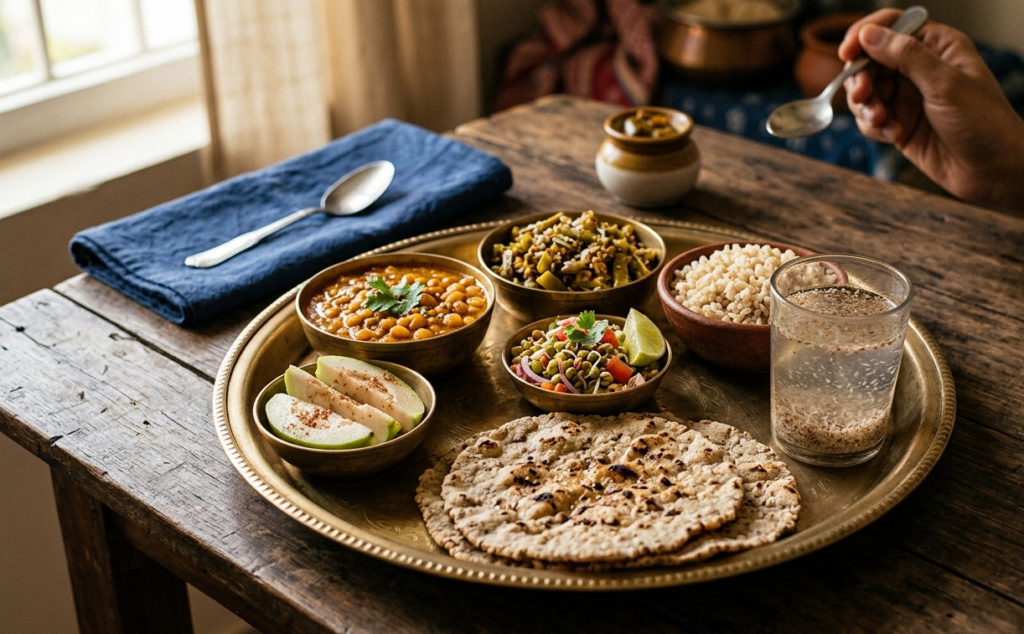
Whole grains are another excellent source of fiber rich Indian foodHigh Fiber Foods for Constipation: The Complete Guide to Natural Relief. Unlike refined grains, whole grains retain their bran and germ — where most of the fiber lives.
- Jowar (Sorghum): ~6.7 g fiber per 100 g. Gluten-free and excellent for blood sugar management.
- Bajra (Pearl Millet): ~8.5 g fiber per 100 g. Ideal for winter months and gut health.
- Ragi (Finger Millet): ~11.5 g fiber per 100 g. Rich in calcium and fiber.
- Whole Wheat Atta: ~2.7 g fiber per roti. Far superior to maida-based products.
- Oats: ~4 g fiber per 40 g serving. Easy to cook as upma, porridge, or chilla.
3. High-Fiber Indian Vegetables You Should Eat More Often
Many everyday Indian vegetables are surprisingly high in fiber. Adding a variety of vegetables to your meals is one of the simplest ways to increase your fiber How Much Fiber Per Day for Weight Loss: The Complete Science-Backed Guide intake.
- Drumstick (Moringa / Sahjan): ~3.2 g per 100 g. A powerhouse vegetable widely used in South Indian cooking.
- Raw Banana (Kachha Kela): ~2.6 g per 100 g. Great as sabzi or steamed.
- Yam (Suran/Jimikand): ~4.1 g per 100 g. A fiber rich Indian food used in curries and stir-fries.
- Lotus Stem (Kamal Kakdi): ~4.9 g per 100 g. A unique and fiber-dense vegetable used in North Indian cuisine.
- Cluster Beans (Gawar Phali): ~3.2 g per 100 g. Commonly eaten in Rajasthan and Gujarat.
- Bitter Gourd (Karela): ~2.8 g per 100 g. Excellent for blood sugar control.
4. Fiber Rich Indian Fruits for Daily Snacking
Seasonal Indian fruits are not just delicious — many are also rich in dietary fiber.
- Guava (Amrood): ~5.4 g fiber per 100 g. One of the best fiber rich Indian food choices for snacking.
- Jackfruit (Kathal): ~1.5 g per 100 g raw; higher when ripe. Popular in curries and biryani.
- Indian Gooseberry (Amla): ~4.3 g per 100 g. Rich in Vitamin C and antioxidants too.
- Pear (Nashpati): ~3.1 g per medium pear. An affordable and widely available fruit.
5. Nuts and Seeds — Hidden Sources of Fiber Rich Indian Food
Small in size but mighty in nutrition, nuts and seeds are easy add-ons that significantly boost your fiber intake.
- Flaxseeds (Alsi): ~27 g fiber per 100 g. One of the richest plant-based fiber sources.
- Chia Seeds: ~34 g fiber per 100 g. Add to smoothies, lemon water, or curd.
- Psyllium Husk (Isabgol): ~85 g fiber per 100 g. Commonly used for constipation relief in India.
- Almonds: ~12.5 g per 100 g. A great snacking option rich in both fiber and healthy fats.
Health Benefits of Eating Fiber Rich Indian Food Regularly
Including more fiber rich Indian food in your diet offers a wide range of health benefits backed by research:
- Improved Gut Health: Fiber feeds beneficial gut bacteria, reducing bloating, constipation, and irritable bowel symptoms.
- Blood Sugar Control: Soluble fiber slows glucose absorptionhttps://pubmed.ncbi.nlm.nih.gov/33096647/, making fiber rich Indian food especially useful for those managing diabetes or PCOS.
- Heart Health: Regular consumption helps reduce LDL (bad) cholesterol and supports cardiovascular health.https://pubmed.ncbi.nlm.nih.gov/29566200/
- Weight Management: High-fiber foods increase satiety, helping reduce overall calorie intake without feeling deprived.
- Reduced Risk of Colon Cancer: Studies suggest a diet high in fiber may reduce colorectal cancer risk.
Sample One-Day High-Fiber Indian Meal Plan
Here’s how you can structure a full day around fiber rich Indian food — no special ingredients required.
| Meal | What to Eat | Approx. Fiber |
| Early Morning | 1 tsp isabgol in warm water + 4 soaked almonds | ~9 g |
| Breakfast | Ragi dosa with coconut chutney + 1 guava | ~8 g |
| Mid-Morning | 1 handful roasted chana (bhuna chana) | ~6 g |
| Lunch | 2 jowar rotis + chana dal + cluster bean sabzi + salad | ~14 g |
| Evening Snack | 1 small bowl sprout chaat with lemon + 1 pear | ~7 g |
| Dinner | Brown rice + rajma curry + sautéed moringa sabzi | ~12 g |
Total estimated fiber intake: ~56 g (well above the recommended 25–38 g/day)
Practical Tips to Add More Fiber Rich Indian Food to Your Routine
- Start slowly: Increasing fiber too quickly can cause gas and bloating. Add it gradually over 2–3 weeks.
- Drink enough water: Fiber absorbs water. Aim for 8–10 glasses of water daily when eating a high-fiber diet.
- Eat fruits with the skin: Much of the fiber in fruits like guava, pears, and apples is in the skin. Wash well and eat whole.
- Switch to whole grains: Replace white rice with brown rice, maida with whole wheat atta, and regular semolina with oats.
- Add seeds to everything: A tablespoon of chia seeds or flaxseeds added to your dal, smoothie, or roti dough is a simple fiber boost.
Frequently Asked Questions
Q1. Which is the best fiber rich Indian food for daily consumption?
Dal (lentils) is arguably the best fiber rich Indian food for everyday use. It’s affordable, easy to cook, rich in both soluble and insoluble fiber, and pairs well with rice or rotis. Masoor, moong, and chana dal are excellent everyday choices.
Q2. How much fiber should an Indian adult eat per day?
The ICMR (Indian Council of Medical Research) recommends 40 grams of dietary fiber per day for Indian adults. The WHO recommends a minimum of 25 grams per day. Most Indians currently consume far less — around 15–20 grams per day. Increasing intake through fiber rich Indian food is the most natural approach.
Q3. Is rice a fiber rich Indian food?
White rice is low in fiber (~0.4 g per 100 g cooked). Brown rice is a significantly better choice with ~1.8 g per 100 g cooked. For maximum fiber intake, replacing white rice with millets like jowar, bajra, or ragi is the most effective strategy in an Indian diet.
Q4. Can fiber rich Indian food help with weight loss?
Yes. Fiber rich Indian food keeps you fuller for longer, reduces cravings, and stabilizes blood sugar — all of which support healthy weight management. Foods like rajma, chana, ragi, and guava are particularly effective for weight management when combined with a balanced diet and regular physical activity.
Q5. What is the highest fiber Indian food?
Psyllium husk (isabgol) contains the highest fiber at ~85 g per 100 g and is commonly used in Indian households as a digestive remedy. Among whole foods, flaxseeds (~27 g/100 g), ragi (~11.5 g/100 g), and kabuli chana (~12.5 g per cooked cup) rank among the highest in fiber rich Indian food options.
Q6. Is fiber rich Indian food good for PCOS?
Absolutely. Women with PCOS benefit greatly from fiber rich Indian food because high-fiber foods help manage insulin resistance, reduce androgen levels, and support hormonal balance. Dal, whole grains, leafy greens, and low-GI fruits like guava are especially beneficial in a PCOS-friendly Indian diet.
Q7. Are Indian street foods high in fiber?
Some traditional Indian street foods are surprisingly good sources of fiber. Bhel puri (with puffed rice and veggies), sprout chaat, corn bhel, and chole (chickpea curry) are fiber rich Indian food options you can enjoy as occasional snacks. Avoid deep-fried or maida-based items that are low in fiber.
─────────────────────────────────────────────
Reviewed & Approved By:
[awes khan]
[Dietitian | Nutritionist | 2+ Years of Experience]
All content on this blog is reviewed by a certified dietitian/nutritionist to ensure accuracy and adherence to evidence-based dietary guidelines.
─────────────────────────────────────────────
⚠️ Medical Disclaimer
The information provided in this article is intended for general informational and educational purposes only. It is not a substitute for professional medical advice, diagnosis, or treatment. Always consult a qualified healthcare provider, registered dietitian, or certified nutritionist before making significant changes to your diet — especially if you have a medical condition such as diabetes, IBS, kidney disease, PCOS, or any other health concern.
Individual nutritional needs vary. The fiber content values listed in this article are approximate and may vary depending on cooking methods, preparation, and specific food varieties. Reliance on any information provided in this blog post is solely at your own risk.
This blog is not affiliated with any medical institution, hospital, or government health body. If you are experiencing digestive discomfort, unexplained weight changes, or other symptoms, please seek medical attention promptly.